What's Inside
- What Severe Over-Pruning Means
- The Styling Decision That Created the Challenge
- Why the Tree Was Vulnerable
- Stabilization: Stop Styling and Preserve Energy
- Rebuilding the Canopy Without Rushing
- Two Years Later: What Recovered
- Tip: Set a Foliage Budget Before Cutting
- Recovery Is a Management Phase
This case follows one Portulacaria afra, commonly called dwarf jade, across a two-year recovery window after severe over-pruning. The tree survived, but survival alone did not restore its design. Recovery required a long pause in styling, careful preservation of new growth, and enough patience to let the tree produce useful branch options again.
What Severe Over-Pruning Means
Severe over-pruning is the removal of more productive foliage and viable growth points than a tree can comfortably support during the intended styling period. That definition centers on function. A canopy can look elegantly sparse while retaining enough active tips to continue growing, or it can cross into an energy deficit even though the branch outline appears convincing.
In this case, the initial styling left the dwarf jade with an excessively sparse canopy. Few active growing tips remained, and much of the retained foliage sat in one part of the framework rather than across the tree. The silhouette looked acceptably shaped on chop day, yet the tree had too little working foliage to power balanced regrowth.
This is a two-year observation of a single tree, documented through dated photographs and contemporaneous notes. It describes the sequence observed here rather than setting a universal timetable for dwarf jade recovery.
The Styling Decision That Created the Challenge
The design goal sounded reasonable: clarify the trunk, simplify the branch structure, and remove growth that distracted from the intended form. Viewed one branch at a time, each proposed cut appeared visually defensible.
The cumulative result caused the problem. Each branch was judged according to its place in the design, but the remaining foliage was never reassessed as one functional canopy. A cut that seems modest in isolation can become severe when it follows several other cuts made during the same session.
The warning signs were visible as soon as the work ended:
- The bare framework occupied far more visual space than the live canopy.
- Only a few active tips remained to continue extension.
- Foliage clustered on one branch instead of supporting several major areas.
- Large parts of the intended structure had no nearby live growth point.
Pause And Count
After a major branch removal, evaluate the whole tree before making the next cut. Count functional growing areas, inspect their distribution, and treat the remaining foliage as part of the design plan.
Why the Tree Was Vulnerable
Why should a succulent species struggle after a clean pruning session? Leaves capture energy, roots support water and nutrient uptake, and stored reserves help initiate new shoots. Removing most of the foliage interrupts that working relationship at the moment the tree needs energy to replace what was lost.
Portulacaria afra carries reserves in its succulent stems and leaves. Those reserves can support recovery, which gives the species a useful degree of resilience in cultivation and care. They remain finite. Once most productive foliage has gone, stored energy becomes the main resource available for maintaining living tissue and activating buds.
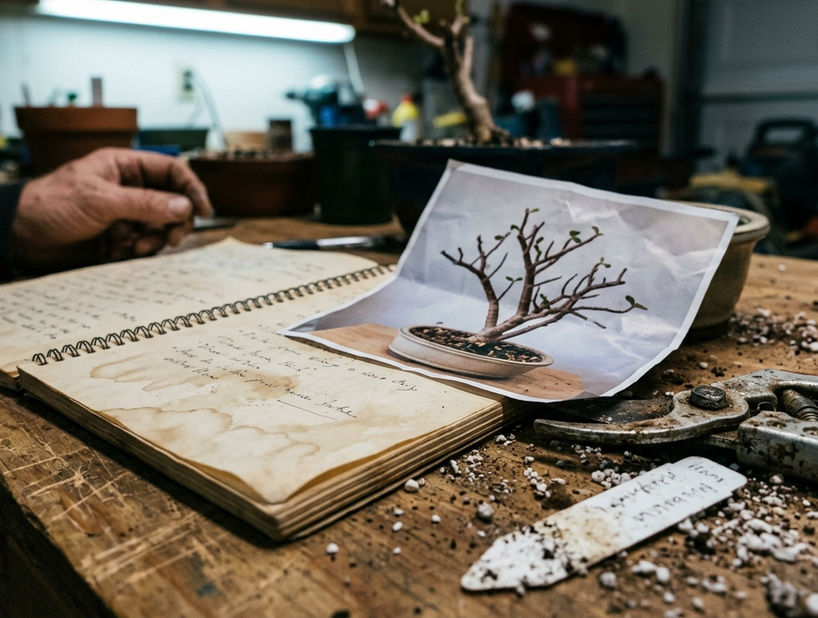
Placement matters as much as quantity. Balanced live growth across the framework gives the tree several possible points from which to rebuild. Here, retained foliage was concentrated on a single branch, so other areas had fewer immediate recovery options. A living branch without an active tip may remain viable, but it offers less certainty than a branch already supporting healthy extension.
Stabilization: Stop Styling and Preserve Energy
The first recovery decision was simple and deliberate: stop refinement pruning entirely. Correcting the sparse silhouette with more cuts would have removed resources from a tree already operating with limited foliage.
The stabilization sequence focused on four jobs:
- Protect the remaining foliage. Every healthy leaf contributed to energy production, regardless of whether its position suited the final design.
- Monitor live growth points. Checkpoints included firm stems, stable leaf condition, active buds, shoot extension, and any signs of dieback.
- Maintain suitable light. Existing foliage needed enough light to remain productive without introducing another abrupt stress.
- Avoid unnecessary pressure. Styling cuts and the urge to pinch untidy growth were set aside while the tree stabilized.
Shoots that emerged outside the intended design were kept rather than pinched. During this phase, photosynthetic capacity outranked branch placement. A temporary shoot could feed its section of the tree, indicate that the underlying framework remained alive, and later provide a choice between branch retention and removal.
Substrate Sets The Pace
Watering was triggered by substrate dryness rather than a fixed interval. This conservative approach assumed a fast-draining succulent mix; the same routine in heavier, water-retentive soil could leave the root zone wet for too long or make restraint resemble neglect.
Stabilization can look inactive because the silhouette remains unresolved. In practice, it is an active management period built around observation and restraint.
Rebuilding the Canopy Without Rushing
A single bud did not mark the start of canopy rebuilding. One bud can extend briefly and then abort. The tree moved into the next phase only after multiple growth points remained active at the same time and shoot extension appeared sustained.
Temporary growth served several purposes. More leaves increased photosynthetic capacity, active shoots revealed viable sections of the framework, and their positions created later branch-selection options. Some growth had little long-term design value, yet removing it early would have traded useful energy for a cleaner outline.
Balance Growth By Area
Weaker and barer sections were allowed to extend. Growth was controlled only when it clearly dominated healthier areas and threatened to pull the tree farther out of balance. This approach did not demand equal shoot lengths. It directed patience toward the parts of the framework with the fewest live options.
The order matters: establish sustained growth, improve foliage distribution, and then resume selective trimming. Reversing that sequence can recreate the original shortage of productive tips.
Two Years Later: What Recovered
At the documented two-year endpoint, the tree was alive and carried broader canopy coverage than it had immediately after the chop. Live shoots occupied more of the framework, and retained branches had better support from nearby growth. The tree had regained enough branch options to make renewed refinement practical.
The record also included losses alongside retained structure. Recovery did not return every section to its pre-cut condition, nor did it erase the consequences of the initial styling session. Its main achievement was restoring a workable relationship among foliage, live shoots, and the remaining branch framework.
Qualitative comparison from the case record| Assessment Point | Canopy Condition | Management Priority |
|---|---|---|
| Immediately after pruning | Sparse canopy, few active tips, and foliage concentrated on one branch | Protect remaining foliage and stop styling |
| Sustained regrowth phase | Multiple active shoots appearing across viable areas | Allow useful extension and limit only dominant growth |
| Two-year assessment | Broader coverage and improved distribution of live shoots | Prepare for gradual refinement from restored options |
No shoot counts or canopy dimensions were recorded, so those changes are described qualitatively. Dated photographs and notes provide the basis for the comparison rather than recollection alone.
Tip: Set a Foliage Budget Before Cutting
A foliage budget turns an abstract warning into a repeatable pre-cut discipline. Before styling, decide which live areas must remain to support each major zone of the tree. These protected areas become boundaries for the session.
Pre-Cut Foliage Budget Checklist
- Photograph the tree from all four sides and from the top before making any cut.
- Mark the live foliage that must remain in each major zone of the framework.
- Write down the design goal and divide the work into staged sessions.
- After every major branch removal, pause and rotate the tree.
- Reassess the distribution of live tips before returning your attention to the silhouette.
Staging the work leaves room to study how the tree responds between sessions. It also separates two questions that are easy to confuse: whether a branch weakens the design and whether the tree can afford to lose that branch today.
Keep Working Foliage
Reserve live growth in every major area you hope to retain. A visually imperfect shoot can serve as temporary support while the surrounding framework develops stronger options.
Recovery Is a Management Phase
Excessive foliage removal created an energy imbalance. Stabilization replaced styling, temporary shoots rebuilt capacity, and gradual regrowth restored design choices over the following two years. The central lesson is practical: protect function first, then shape the growth that function makes possible.
Before your next styling session, photograph the tree from every side and mark the live foliage that must remain in each major branch zone before you pick up the cutter.