What's Inside
- Why Growers Form Organic Fertilizer Into Cakes
- Ingredients, Ratios, and Tools
- Mix, Form, and Cure the Cakes
- Apply Conservatively and Observe
- Key Takeaway
- Worked Example: One Small Batch
Why Growers Form Organic Fertilizer Into Cakes
Loose organic meal migrates across shallow bonsai substrate every time you water. A heavy stream from a watering wand washes the powder over the rim, wasting nutrients and clogging drainage screens. Forming the meal into a solid cake solves this mechanical issue—the fertilizer stays localized on the soil surface.
A solid cake simplifies removal and replacement compared with picking scattered meal out of the pot. Nutrient release relies entirely on moisture and microbial decomposition. A cake sitting in warm summer conditions with daily watering breaks down noticeably faster than the same cake in cool spring air watered every second or third day. Understanding this dynamic is a basic part of managing tree health.
Ingredients, Ratios, and Tools
A fertilizer cake relies on three components: seed meal, bone meal, and water. Seed meal acts as the bulk material. Bone meal shifts the nutrient profile. Water serves strictly as the binder. Because the exact ratios have not been verified, no numerical recipe is given here.
Warning: Dust from powdered seed and bone meal irritates airways. Mix in a ventilated spot and wear gloves and a dust mask when handling the dry powders, especially bone meal.Gather one dedicated mixing bowl, a measuring scale and spoons, a mixing spoon or gloved hands, several shallow rigid molds of matched size, a breathable curing tray, and a labeled airtight storage container. Keeping these tools together makes mixing and cleanup easier.
Mix, Form, and Cure the Cakes
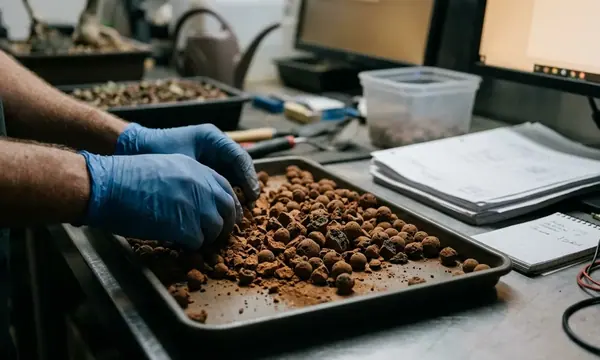
The most common error in cake production occurs when all the water is added at once. A coarser grind can absorb visibly more liquid than a fine grind made from the same weight of meal. Add water in small controlled increments rather than pouring to a target. Insert a deliberate rest period, then perform a squeeze test before forming.
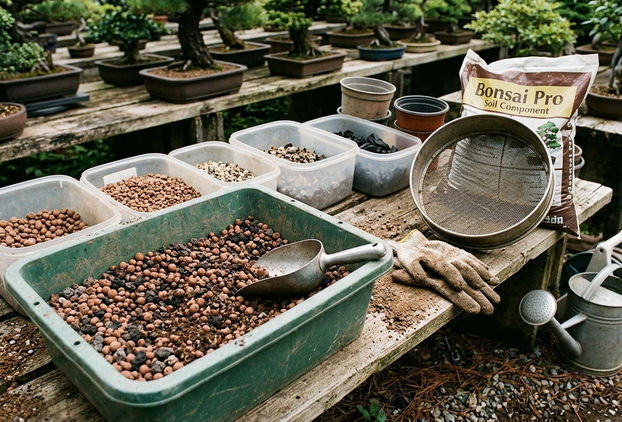
A squeezed handful must hold its shape under firm pressure without releasing water droplets, without smearing into paste, and without splitting at the edges. A cake mixed to a smooth paste-like consistency looks convincing in the mold but slumps and smears during curing, then breaks down too fast and can sour against the soil surface.
Cure in shade with airflow and turn the cakes when the underside stays damp. Readiness shows as firm surfaces, no cool or soft center, no visible mold, and no deformation when lifted. The same recipe and cake size behaves differently in a humid coastal summer than in a dry inland spring. Coastal cakes stay soft in the center longer and are more prone to mold before they finish curing. This difference is particularly noticeable when managing bonsai outdoors in California. Curing solves handling and storage problems only. A well-cured cake made from an unverified or overly rich formula is still unsafe to apply to a stressed tree, a dormant tree, or a fast-draining inorganic substrate.
Apply Conservatively and Observe
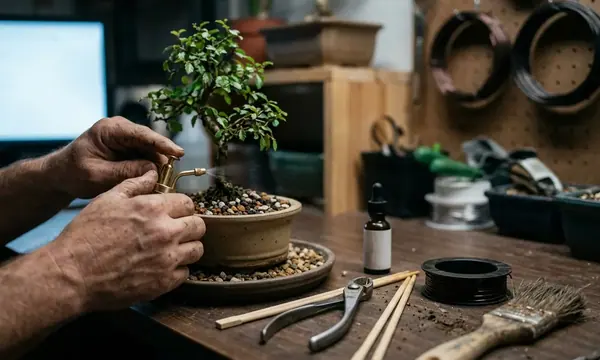
Test the batch on a single healthy, established tree in active growth before using it across a collection. A bad formula applied universally can cause widespread root damage. Place cakes on the soil surface where routine watering can wet them. Keep them away from direct contact with exposed roots and the trunk base.
Pot size alone does not determine dosage. Species vigor, substrate drainage, watering frequency, weather, and other fertilizers also matter. Check species guides to understand specific feeding tolerances. Remove the cake and reassess if you notice persistent foul odor, a slimy or discolored surface, pest activity around the cake, or leaf scorch, yellowing, or dieback in the tree.
Pro Tip: Always prioritize tree health over a feeding schedule. If a tree shows signs of stress, remove the fertilizer immediately.Key Takeaway
The process is easiest to control step by step. Verify the formula, measure consistently, add water gradually, form uniform cakes, cure thoroughly, store dry, and begin with cautious application. Successful use depends on observation rather than assuming every cake releases nutrients on a fixed schedule.
Key Takeaway: Before use, check cake firmness, absence of foul odor, no mold, dry storage, tree health, appropriate season, and any concurrent feeding.Worked Example: One Small Batch
Consider a healthy deciduous bonsai in active growth. Set up a clean outdoor potting bench to handle the dust. Measure the seed-meal and bone-meal quantities from a tested recipe. Mix the powders thoroughly. Add the recipe's starting water quantity in controlled increments.
Squeeze a test portion. Correct the moisture level only if it crumbles or smears. Press the mixture into equal molds. Arrange the cakes on a breathable tray. The run ends at a decision point rather than a date. Replace, remove, or delay the next cake based on how far the current cake has physically broken down and how the tree looks, not on an assumed universal timetable. That keeps the feeding decision tied to the cake's condition and the tree's response.