What's Inside
- Evaluating Sapling Readiness for Flat-Top Styling
- Recognizing the Signs of a Weak or Unsettled Tree
- Defining the Trunk Line and Root Foundation
- Maintaining Even Moisture in the Root Zone
- Executing the Trunk Chop and Selecting a Leader
- Designing the Broad Canopy Framework
- Synchronizing Pruning Severity with Tree Vigor
- Implementing This Development Framework
Evaluating Sapling Readiness for Flat-Top Styling
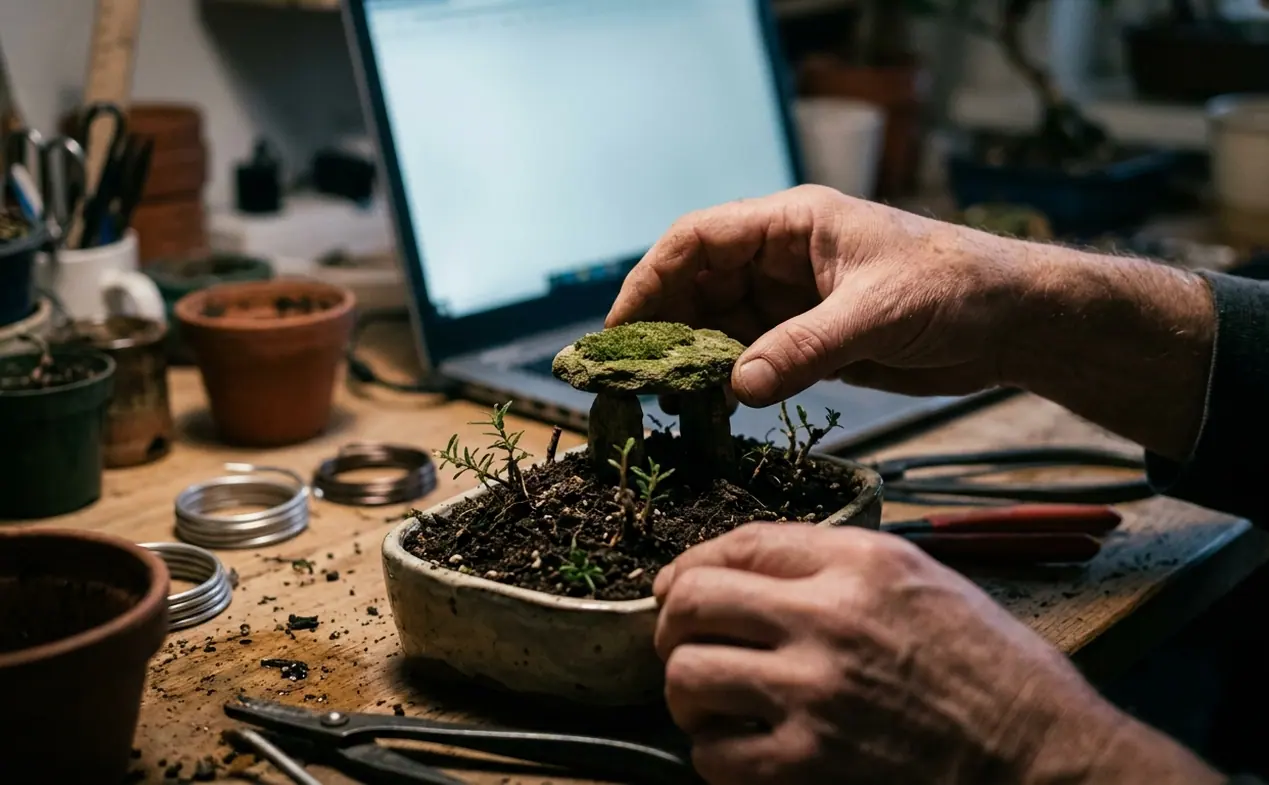
Is this Bald Cypress sapling ready to begin its transformation into a flat-top bonsai?
That assessment should come before any tools touch the wood. Many failed styling attempts trace back to a chop performed on nursery stock that was still recovering from being moved into a training pot. The USDA profile for Taxodium distichum outlines the species' natural resilience, but container cultivation demands a deliberate sequence of operations. This tutorial follows the development of a Bald Cypress from initial root establishment through the creation of its first canopy framework.
Evaluating readiness requires looking past the immediate desire to shape the tree. Current-season shoot extension must be visibly strong and at least equal to last season's growth. The tree needs firm anchorage in its container; a gentle rock at the base should move the entire pot, indicating a stable root mass, rather than shifting the trunk loosely in the substrate. Only when these conditions are met can the sapling support the severe reduction required for flat-top styling.
Recognizing the Signs of a Weak or Unsettled Tree
Every major operation draws heavily on the sapling's energy reserves. Combining these procedures multiplies the stress on the vascular system. Separate the two heaviest operations by a full growing season, allowing the tree to re-establish a working root mass before the trunk is shortened.
Certain visual cues indicate that a tree is not ready for a trunk chop. Thin, pale foliage points to a compromised root system or nutritional deficiency. If the last season's shoot extension is noticeably shorter than the season before, the tree is losing momentum. Roots that were cut, torn, or dried during a recent move require time to heal. Any tree potted within the current growing season lacks the established fine feeder roots necessary to push new growth after a severe reduction. When these signs appear, wait before making the cut.
Defining the Trunk Line and Root Foundation
The intended image dictates the location of the cut. A successful flat-top design features a substantial tapered trunk supporting an elevated, broad crown inspired by mature Bald Cypress specimens in nature. This aesthetic requires a different approach than the compact triangular silhouette common in traditional conifer styling.
Inspect the sapling from multiple viewing angles to find the most compelling front. Place the pot on a bench at chest height and rotate it in quarter turns. Photographing each face helps isolate the visual impact of the basal flare and root spread, which read very differently in a two-dimensional image than they do when viewed from above. Front selection relies on a weighted judgment of trunk movement, visible root spread, the location of existing scars, and the position of possible replacement leaders.

The intended final height influences the approximate chop area. A common working proportion places the first chop roughly one third of the intended finished height, leaving the remaining two thirds to be rebuilt from the replacement leader. This ratio is flexible and must be adjusted up or down to land on usable buds or a live branch.
Securing the root foundation supports the entire structure. Tie-down wire in the 2–2.5 mm range, threaded through drainage-mesh-covered holes, provides enough tension to immobilize a sapling-sized root plate in a training box. Circling and crossing roots are removed gradually over two or more repottings, retaining the fine feeder roots on the remaining radial arms. When reducing the trunk, tool sizing matters: concave cutters handle trunks up to roughly 20–25 mm, while a fine-toothed pull saw gives a cleaner face on cuts above 30 mm without crushing the cambium.
Maintaining Even Moisture in the Root Zone
A newly established Bald Cypress cannot be allowed to dry completely, particularly during active growth and warm, windy conditions. A single pass with a watering wand often wets only the upper layer of a dense root mass. Water thoroughly until it runs freely from the drainage holes, pause to let it soak in, and then water again. Adding small surface splashes creates a false sense of security while the core of the root ball turns to dust.
Environmental factors drastically alter water consumption. A shallow training container sitting in full sun with heavy wind can move from saturated to dry at the surface within a few hours on a hot day. That same pot in cool, overcast weather may hold moisture for days. Lift the container at the rim to gauge its weight, observe the color change at the substrate surface, and note how quickly water disappears during the first pass.
The oxygen boundary on swamp tolerance in this guide: a 1–3 cm tray under a free-draining pot during warm extension growth is management, while the same standing water on cool-season or freshly root-worked Taxodium distichum is the stagnation that ends the chop recovery. Tray culture belongs exclusively to warm-weather extension growth on a tree already sitting in a free-draining substrate with clear holes. As growth slows, drain the tray and return the pot to free drainage.
Executing the Trunk Chop and Selecting a Leader
Executing the chop requires a methodical approach to prevent irreversible mistakes. Use the following sequence so the cut aligns with the tree's future design.
- Confirm strong, active growth across the entire canopy.
- Select the definitive front based on basal flare and trunk movement.
- Mark the chop above a viable branch or budding area capable of continuing the trunk line.
The height of the cut presents a distinct trade-off. A lower chop creates stronger taper but requires significantly more time to rebuild the trunk line. A higher chop retains more of the existing development but may produce a less convincing transition. Making the initial cut roughly 3–8 cm above the intended final transition point provides a buffer. Dieback below a fresh cut is unpredictable on Bald Cypress; this extra stub allows the dieback zone to be assessed and removed safely during later refinement.

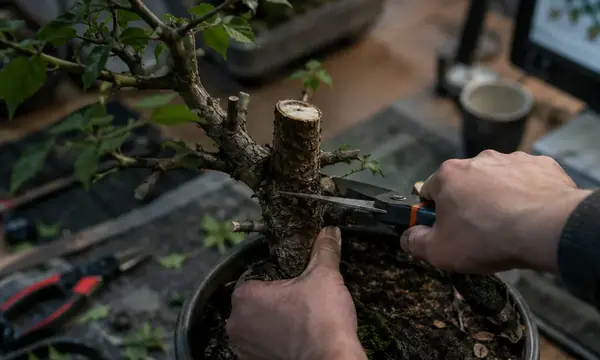
Stabilize the tree firmly with one hand and use a clean, correctly sized tool to make the cut, avoiding any twisting motion that could tear the bark. Bald Cypress commonly pushes adventitious buds on bare trunk wood. In warm-season conditions, new shoots below a chop typically appear after somewhere around 2–6 weeks on a vigorous tree.
The replacement leader is usually allowed to run unchecked through at least one full extension flush before any shortening. Early cutback stalls the rapid thickening needed to soften the chop transition. Meanwhile, sacrifice growth left low on the trunk must be monitored closely for swelling at the junction and removed before it builds a knuckle wider than the surrounding trunk.
Designing the Broad Canopy Framework
When should a practitioner move from trunk construction to canopy refinement? This transition occurs only after the trunk possesses sufficient scale, convincing taper, and a dependable upper leader. Branches set on an under-thick trunk quickly become oversized as the trunk catches up, ruining the tree's proportions.
The four-gate Bald Cypress buildout used here begins with a radial surface-root plate, followed by a deliberately high chop left 3–8 cm above the final transition, one unchecked replacement leader through a full flush, and an elevated crown of unequal lateral branches. Each gate opens only after the previous season's extension growth. This order gives the foundation time to support the canopy.
Select primary branches with varied spacing and direction. Avoid bar branches and whorls where three or more equally vigorous shoots emerge from one node. Reduce these congested junctions to one or two shoots with clearly different exit angles before they thicken. The flat-top structure relies on an elevated crown with lateral spread, open interior spaces, and irregular branch lengths. Width comes from the lower and outer primaries extending horizontally, while selected upper shoots are directed outward and slightly upward to raise the crown plane.
During the structural phase, branches are left long to build caliber. The refinement phase begins only once a branch has reached its intended thickness, proceeding by repeated extend-and-cut-back cycles to build ramification. Wire must be checked whenever new extension is visible on the wired branch; swelling during a strong flush can deeply mark developing cypress wood before the branch has fully set its position.
Synchronizing Pruning Severity with Tree Vigor
Matching the severity of the cut to the tree's current strength forms the core of this entire process. A moisture-stressed or poorly drained root system cannot reliably support major pruning. Watering practices directly support every subsequent design decision, ensuring the vascular system has the pressure and resources needed to push new buds after a heavy reduction.
Skipping steps in the development order leads to structural flaws that take years to correct. Building the canopy before the trunk has achieved its final thickness results in disproportionate branches that must eventually be removed. Patience during the unchecked growth phases yields a more convincing, powerful bonsai in the long run.
Implementing This Development Framework
This guide presents a species-development framework rather than a rigid calendar. Horticultural timing must be adjusted for the individual tree’s condition, the specific microclimate of the growing environment, and the seasonal variations of the current year.
Success with Taxodium distichum relies on observation and restraint. The techniques described here provide the mechanical steps for styling, but the tree's physiological response dictates the pace of the work. Is your Bald Cypress vigorous enough for a trunk chop now, or does it need another cycle of root and trunk growth?