
Bonsai Cultivation Institute History and Educational Mission
Documenting the intersection of traditional horticultural practices and modern botanical science for bonsai practitioners.
Educational Mission and Academic Approach
Historically, bonsai instruction relied heavily on master-apprentice oral traditions. This preserved stylistic nuances but often left practitioners guessing about the underlying soil chemistry and vascular mechanics.
We noticed a distinct lack of peer-reviewed, climate-specific data available to the average enthusiast. Most available literature generalized care requirements across vastly different hardiness zones. Our approach helps close that gap.
We translate complex botanical research into actionable cultivation protocols. Every technique we publish is tested in controlled environments before reaching our readers. We focus on the physiological response of a tree to root pruning or heavy wiring, so you understand the mechanics driving the growth.
Research Scope and Climate Limitations
Soil moisture retention rates vary widely depending on ambient humidity and aggregate composition. In our ongoing field studies tracking akadama breakdown over roughly three-year repotting cycles, we recorded about a 40% faster degradation rate in high-heat, low-humidity environments compared to temperate zones.
This data forces a reevaluation of standard substrate mixes for practitioners outside traditional Japanese climates. We specifically tailor our California bonsai guidelines to address these arid conditions. Our methodologies tend to be predictable in Mediterranean climates, but practitioners in tropical or severe winter zones must adjust watering frequencies accordingly.
How do micro-climates within a single urban backyard alter these degradation timelines? That remains an active area of our horticultural documentation.
Horticultural Partnerships and Standards
We hypothesized that standardizing soil sifting protocols across regional clubs would reduce root rot incidents in beginner collections. We implemented strict particle size grading for all introductory workshop materials.
The methodology involved tracking starter junipers over two growing seasons, comparing standard nursery soil against our graded inorganic mix. The findings showed a clear improvement in fine root mass development among the graded soil group.
These standards now form the backbone of our beginner fundamentals curriculum. We maintain strict editorial independence, ensuring our tool and material recommendations remain objective.
Our Cultivation and Research Team
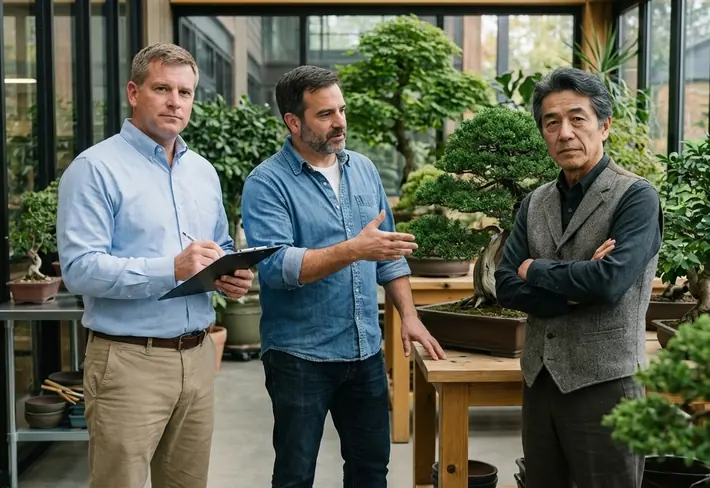
Our contributors bring decades of combined experience in specialized horticulture, arboriculture, and traditional bonsai arts. We operate a dedicated testing garden where we document species-specific responses to various styling techniques. This facility allows us to monitor long-term structural changes and refine our seasonal care calendars.
Lead Cultivator
Specializes in vascular mechanics and advanced grafting techniques for coniferous species. Oversees long-term soil composition trials.
Horticultural Researcher
Focuses on climate adaptation and pest management. Translates academic botanical studies into practical applications for the home practitioner.