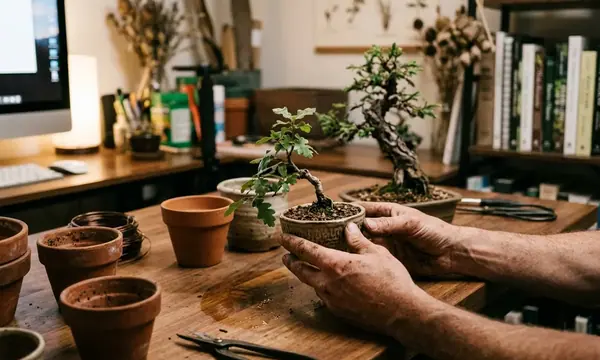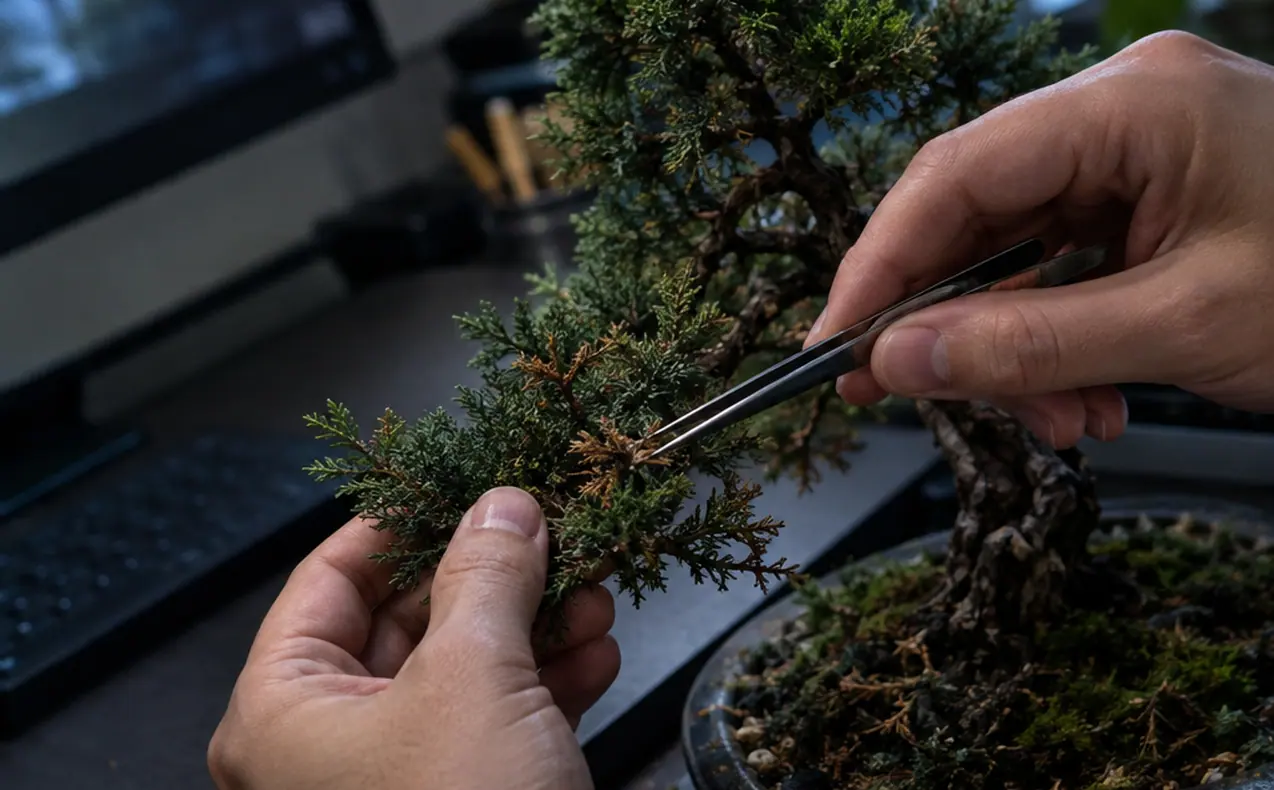
A juniper kept on a desk can weaken and die even when its owner waters carefully, trims stray growth, and keeps the pot tidy. The trouble often remains hidden because juniper foliage may stay attached and green for several weeks after root function has failed. By the time the foliage turns dull grey or straw-brown, recovery may no longer be possible.
What's Inside
- Why desk placement costs a juniper its health
- How rooms exhaust sun-adapted junipers
- Better bonsai choices for apartments
- Steps for moving an indoor juniper outside
- Choosing between juniper and tropical bonsai
- How this guidance was prepared
The Hidden Cost of Keeping a Juniper on Your Desk
A familiar case begins with a healthy-looking juniper purchased in autumn. It sits beside a computer through winter, receives regular water, and seems fine until the foliage loses its shine. Browning follows later, which makes the final decline look sudden.
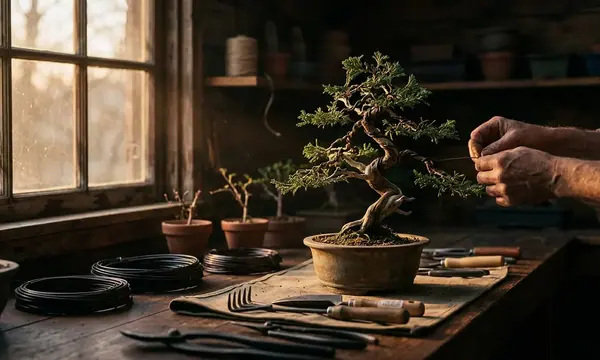
The word bonsai describes a growing method and artistic form, not a category of naturally indoor plants. A juniper remains an outdoor conifer after training, wiring, and placement in a shallow container. Its compact size does not change its biological need for strong light, moving air, and seasonal temperature shifts.
The delay between injury and visible symptoms creates the central misconception. Juniper scale foliage dehydrates slowly and can retain color after the roots and stored reserves have collapsed. Unlike a deciduous tree, it offers no clear leaf-drop warning.
Check Living Tissue
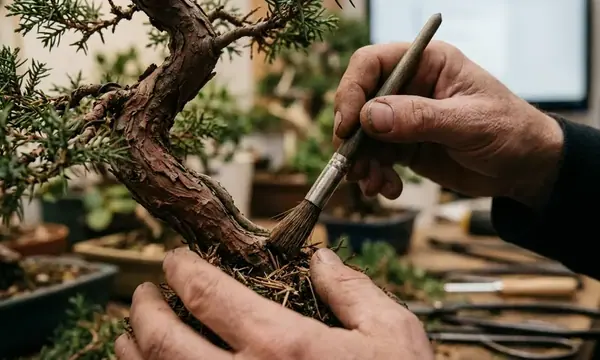
Lightly scratch the bark on a small secondary branch. Green cambium beneath the surface indicates living tissue. Dry tan tissue across secondary branches, primary branches, and the trunk points to a tree that has passed the recoverable stage. Keep the test small because repeated scratches create needless wounds.
Why a Bright Room Still Exhausts a Juniper
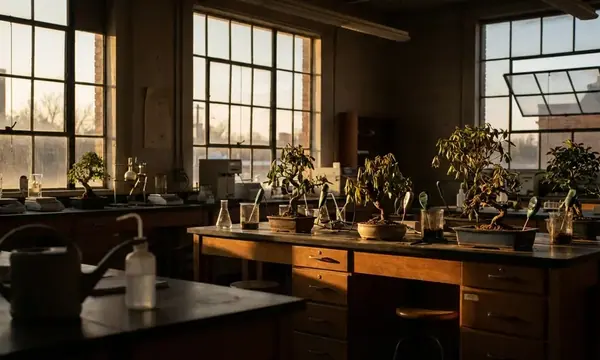
How can a room that feels bright leave a tree light-starved? Human eyes adjust quickly as illumination changes. Photosynthesis cannot make the same adjustment.
Walls block much of the sky, while window orientation and seasonal sun angles limit direct exposure. Glass reduces more light, and intensity falls sharply with every step into the room. The move from a windowsill to a desk can cost a sun-adapted conifer more usable light than the change from clear outdoor sky to an overcast day. A bright-looking room therefore says little about whether the foliage receives enough energy.
Temperature adds a separate strain. Junipers respond to shortening days and cooler nights by slowing extension growth and entering winter dormancy. A consistently warm room interrupts those linked seasonal cues. Exact timing and winter protection depend on the identified species, local climate, container depth, and severity of cold weather, so a single temperature rule would mislead growers.
Heated air also draws moisture from the foliage while weak circulation leaves dense foliage pads still. Spider mites often exploit this combination; fine webbing and a dusty grey cast deserve prompt inspection.
The root zone can remain wet at the same time. Peat-heavy or compacted substrate may dry at the surface while holding water lower in the pot. A grower notices stressed foliage, waters again, and reduces the oxygen available to already weakened roots.
Indoor Bonsai That Fit Apartment Conditions
Choose a species around the environment you can maintain every day. The desired silhouette comes second.
Ficus microcarpa and Ficus retusa adapt well to stable room temperatures when they occupy the brightest suitable window. They still require ample light, open drainage, and consistent observation. Protect them from cold window gaps and entry-hall drafts, which can trigger abrupt leaf drop.
Portulacaria afra suits a warm, very bright position. Its fleshy leaves and stems store water, so its watering rhythm differs sharply from a juniper’s. Let substrate moisture, pot weight, and active growth guide the next watering rather than applying the same weekly routine throughout the year.
A free-draining substrate based on materials such as pumice, lava, akadama, or a bark-and-grit equivalent helps indoor tropical roots receive oxygen. The pot also needs unobstructed drainage holes. Where window light remains marginal, a timed supplemental lamp can extend useful illumination without exposing the tree to continuous light.
Check Winter Nights
These tropical choices assume a room that stays warm through winter. An unheated flat or cold holiday cottage may suit a hardy outdoor species better, provided the tree receives appropriate root protection.
Moving an Indoor Juniper Back Outside
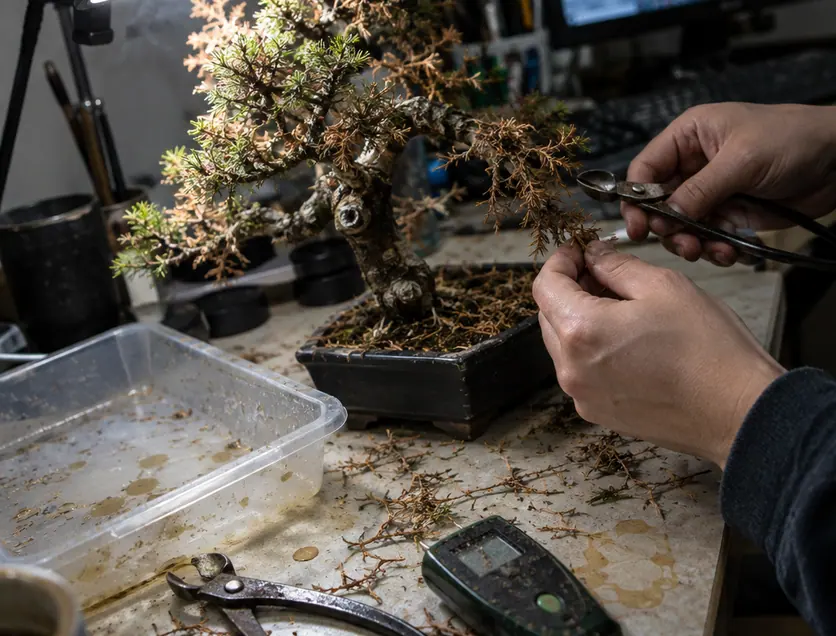
A weakened juniper benefits from a measured triage sequence. Avoid repotting, pruning, fertilizing, and changing exposure during the same weekend.
-
Identify the Tree
Confirm that the plant is a juniper and narrow the identification as far as practical. Species and cultivar affect cold tolerance, growth habits, and suitable winter protection.
-
Inspect Foliage and Substrate
Look for flexible green growth, brittle branch tips, webbing, compacted soil, blocked drainage holes, and water standing in a saucer. Use a small bark scratch only where the foliage gives an uncertain signal.
-
Choose a Sheltered Outdoor Position
Begin in bright open shade or a place that receives gentle morning sun. A tree that formed foliage in a dim room can scorch during one abrupt afternoon in full exposure. Increase direct morning light in small stages as the foliage acclimates.
A heated winter room also reduces cold acclimation. If nights remain near freezing or severe weather is approaching, use an unheated porch, cold frame, or similarly sheltered transition space until conditions settle.
-
Correct Only Obvious Drainage Faults
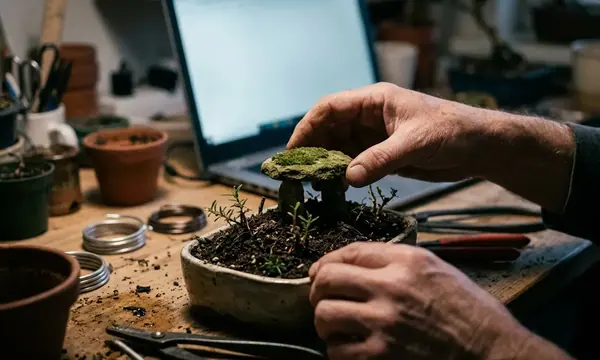
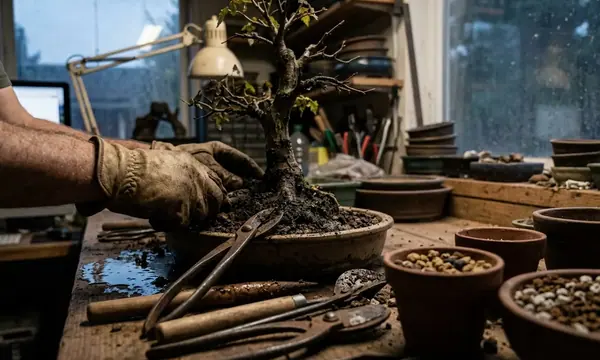
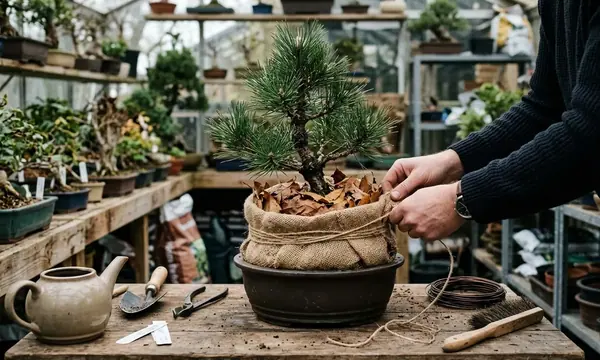
Open blocked holes and stop leaving the pot in standing water. Postpone a full repot unless the existing container creates an immediate drainage emergency. Root work, structural pruning, and wiring can wait until the tree has completed a healthy outdoor growing season.
-
Water From Evidence
Insert a bamboo skewer or chopstick into the root ball, wait briefly, and remove it. Water when the skewer feels dry at mid-depth and the pot feels appreciably lighter. Saturate the root ball until water flows freely from the drainage holes, then allow the container to drain completely.
Avoid Rescue Overload
Do not fertilize a recently moved, weakened juniper until healthy extension growth is visible. Fertilizer cannot repair damaged roots and may add stress to a compromised root system.
Choose an Outdoor Juniper or an Indoor Tropical
The practical decision rests on the growing space under your control. A balcony, terrace, garden, roof space, or secure exterior ledge can support a juniper when it provides genuine outdoor exposure and climate-appropriate winter protection. Without such a space, begin indoor care with a tropical or subtropical species suited to warm rooms.
Let Placement Decide
Junipers belong in outdoor seasonal conditions; indoor bonsai should begin with a tropical or subtropical tree that can live in the brightest practical window.
Placement influences long-term health more than a decorative container, frequent misting, or an elaborate maintenance routine. Misting raises local humidity only briefly and does not replace strong light, dormancy cues, or oxygen around the roots.
The two sound paths are clear: establish an outdoor home for the juniper and protect its shallow root system according to local winters, or select an indoor tropical and give it stable warmth, drainage, and useful light.
About the bonsaiexperience Editorial Team
The bonsaiexperience editorial team prepares educational guidance on bonsai growing, species care, and beginner fundamentals.
Before your next tree comes home, can you provide a genuine outdoor position for a juniper, or should you choose a tropical bonsai for your brightest indoor window?