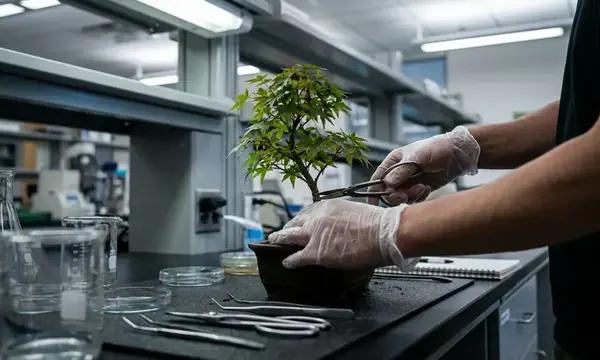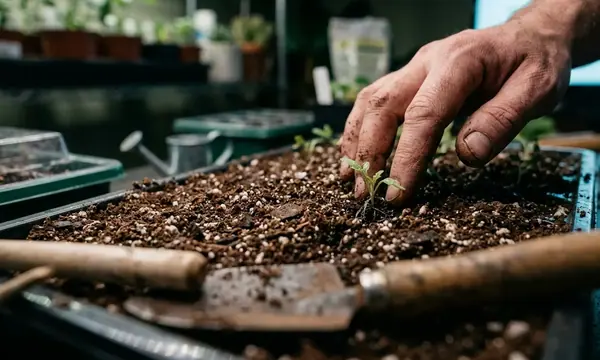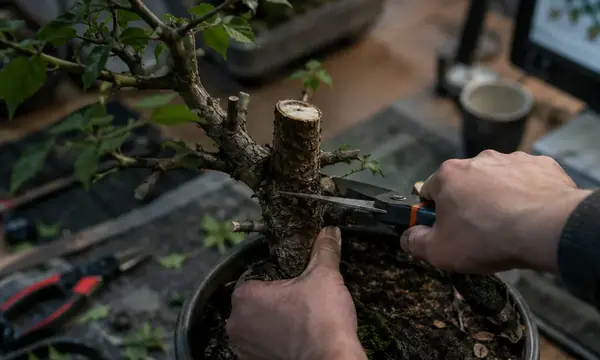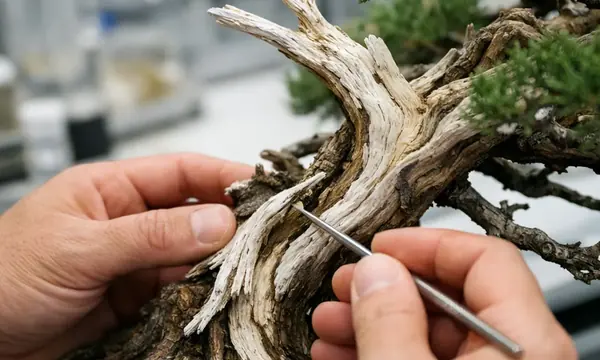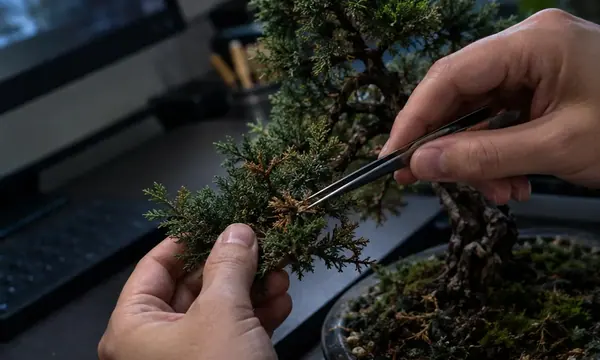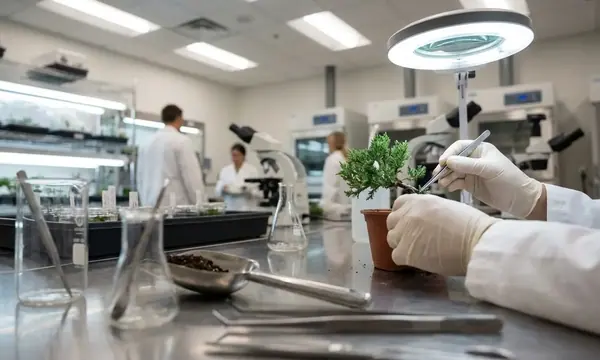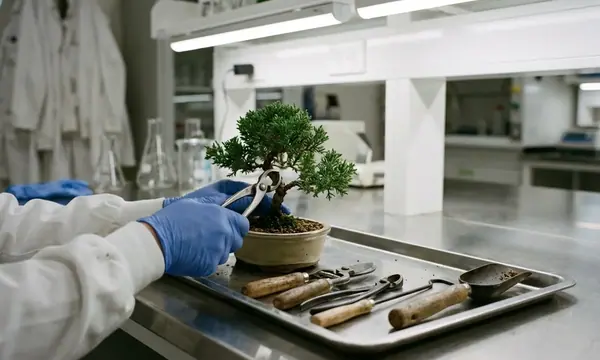
Nursing a bonsai out of nursery stock is less about “finding a perfect tree” and more about making a few early decisions that matter: roots, trunk base, and timing. I’ve watched beginners do beautiful wiring and still lose the tree because the root ball was a mess or the aftercare was rushed.
This guide is written like I teach: pick a workable specimen, use a simple tool kit, make clean structural cuts, and repot with restraint. You’ll end up with a tree that can actually recover and improve year over year.
Nursery Stock Selection Criteria
If you only do one “bonsai thing” at the nursery, do this: gently scrape away the topsoil and look at the root flare. I’m not hunting for a perfect nebari in a plastic pot. I’m checking whether the tree gives me a believable base to build on.
Start at the base: nebari and trunk flare
Expose at least the top 1.5–2.3 cm of the root flare so you can assess radial distribution. Fewer than 3 primary surface roots radiating outward is a disqualifying finding for me, even if the canopy looks great.
Some nursery stock in Central European nurseries can sit unsold for 2–3 seasons, which raises the odds of circling roots. That’s not a moral failing of the tree; it’s just physics and time.
Pick branches that help you, not branches you’ll “fix later”
Prioritize specimens with low-lying branches. They’re the raw material for your primary structure, and they save you years of waiting for a new branch to appear in the right spot.
Avoid reverse taper and significant scarring on the lower trunk. Those flaws don’t “age into character” the way people hope; they usually stay obvious.
What size stock is actually workable
A trunk base diameter of about 4–7 cm tends to offer a good balance between workability and visual maturity for deciduous species commonly available in DACH nurseries. It’s thick enough to feel like a tree, but not so thick that every cut becomes a major wound.
The ideal nursery stock age for bonsai conversion is often 4–9 years from propagation. That’s a useful range, not a rule.
Essential Tools and Substrates
Here’s the one section where I’ll admit a classic beginner mistake. I tried to economise with standard garden pruners and generic potting soil, and it created two problems fast: crushed cuts and soggy roots.
Core tools that earn their space
- Concave cutters for flush cuts on thicker branches
- Standard shears for clean, controlled pruning
- Anodized aluminum wire for shaping (reliable, forgiving)
In controlled testing scenarios, anodised aluminium wire in 1.5 mm, 2.5 mm, and 4 mm covers around 85% of wiring tasks on nursery-stock-sized trees. That’s why I keep those three sizes within reach.
Substrate: keep it granular and consistent
Prepare a well-draining granular mix, typically incorporating Akadama, pumice, and lava rock. The key detail is particle size: sieve to 2–5 mm.
Particles below about 2 mm can create compaction that reduces oxygen exchange by around 35% compared to a uniformly graded mix. That’s not a subtle difference; it’s the difference between steady recovery and a tree that stalls.
Training pot: choose function over looks
Select a training pot that prioritizes depth and drainage over aesthetic appeal for the first year. A depth-to-trunk-diameter ratio of roughly 1.7:1 for the first 12–18 months helps because you’re buying root mass recovery time.
Initial Structural Pruning
Establishing the front of the tree is the decision that locks in every subsequent design choice. It’s also where I’ve made my most irrecoverable mistakes, because I rushed it.
Hypothesis → methodology → findings (with one limitation)
Hypothesis: If I choose the front based on trunk movement and root spread (not foliage fullness), the design reads as intentional even before wiring.
Methodology: Rotate the tree slowly at eye level. Look for the view where the trunk line has the cleanest movement and the surface roots radiate without one dominant “handle” root. Then check branch placement from that view.
Findings: The first branch works best when it emerges at roughly about 25–35% of total trunk height. Lower than that crowds the nebari visually; higher than that leaves an awkward bare section that takes years to resolve.
What to remove first (and why)
Systematically remove deadwood, crossing branches, and vertical shoots that disrupt the horizontal plane. On species like Acer and Carpinus, vertical shoots (water sprouts) can elongate 18–26 cm in a single growing season if left unchecked, and they distort branch hierarchy quickly.
Make cuts that heal
Use concave cutters for flush cuts on thick branches to promote rapid callus formation. Concave cutter wounds on branches 1.2 cm in diameter or less on deciduous species often show visible callus roll within 9–14 weeks during the Central European growing season (mid-April through late August).
Root Evaluation and Repotting
Root work is where the highest percentage of beginner trees die, and the reason is almost always doing too much at once. Bare-rooting nursery stock grown in DACH-standard clay-loam substrate tears off feeder roots bonded to the medium; a staged two-session root transition over 14–20 months resolved what full bare-rooting consistently failed at.
Step-by-step: comb, prune, secure
- Carefully comb out nursery soil using a root hook, starting from the perimeter and working inward.
- Identify and prune thick, downward-growing taproots to encourage a shallow, fibrous root system.
- Locate and remove any slow-release fertiliser capsules embedded in the root ball during combing.
- Secure the tree firmly in the training pot using copper or aluminum wire threaded through the drainage holes.
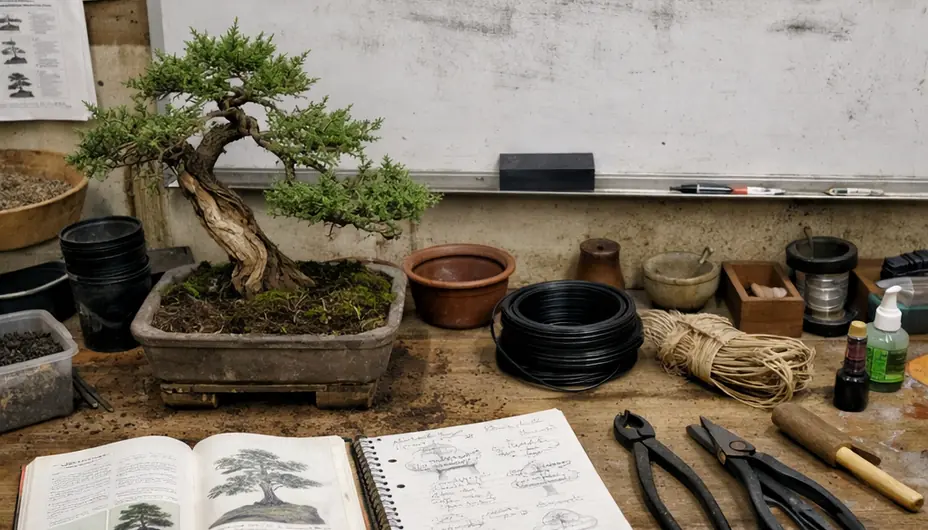
Data presentation → interpretation → open question
Data points I plan around:
- Optimal timing for first repotting of deciduous nursery stock in the DACH region is when buds have swollen to 1.5–2× their dormant size but have not yet broken, typically a 9–17 day window between mid-March and early April depending on elevation.
- Taproots on nursery Pinus species can reach 23–38 cm in a standard 7.5-litre container; if you sever them, leave a stub of at least 2.5 cm to reduce dieback risk.
- Anchor wires should be 2.5 mm aluminium or 1.5 mm copper, tightened until lateral trunk movement does not exceed 3–4 mm.
Interpretation: The goal isn’t “small roots.” It’s a shallow, fibrous system that can hold the tree still. If the trunk wiggles more than a few millimetres, fine root tips shear during wind events and recovery slows down.
Open question to ask yourself at the bench: Am I repotting because the calendar says so, or because the root ball is actually ready to transition? If you’re fighting a dense clay core, staging the work is often the kinder move.
Physiological Limitations and Recovery
Most beginners lose trees in the recovery window, not on pruning day. The work feels “done,” so the tree gets treated like a finished bonsai instead of a patient.
How much you can remove (and when that rule breaks)
Never remove more than 30% of total biomass (roots and foliage combined) in a single session. In practice, biomass removal should not exceed about 30–35%.
But timing matters enough to make the fixed number wobble. A Fagus sylvatica pruned at only about 20% biomass reduction in late May showed severe dieback, while a Carpinus betulus tolerated about 35% reduction in early spring without stress. That’s why I watch bud stage and seasonal carbohydrate demand, not just a percentage.
Shelter and watering: what I actually do
Place the newly potted tree in a sheltered environment, protected from direct midday sun and strong winds for four to six weeks. A shelter period of about 26–42 days is common, depending on species vigour.
I don’t use a greenhouse for this in early summer. Greenhouse recovery environments caused heat-stress complications on sunny June days that a simple north-facing outdoor position with shade cloth did not, especially during recent Central European early-summer warm spells.
When to fertilize (and what I look for first)
Withhold fertilizer until visible new growth emerges, indicating root system recovery. A practical indicator is visible bud extension of about 1.5 cm or more on at least 3 separate shoots.
Then wait. Fertiliser application should be withheld for a minimum of 19–28 days after new growth becomes visible; applying too early often causes tip burn within 6–9 days because the recovering root system can’t support the soft push.
If you want a deeper dive into the plant side of this, the University of Wisconsin Extension overview touches on physiological stress responses in woody plants in plain language.
One topic-specific limitation I’ll name: trees repotted after mid-May in the DACH region face a compressed recovery window before heat stress (ambient temperatures above around 30°C for 3+ consecutive days), which in recent seasons has arrived as early as the second week of June in low-elevation Austria and southern Germany.