What's Inside
- A Spring Bench Moment
- What Repotting Actually Disturbs
- Mature Trees Value Stability
- When Waiting Becomes Neglect
- Inspect Yearly, Repot Selectively
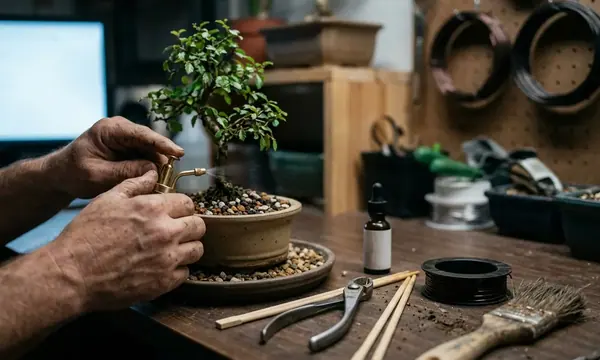
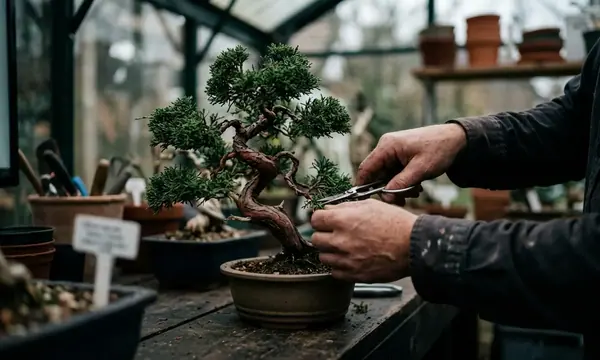
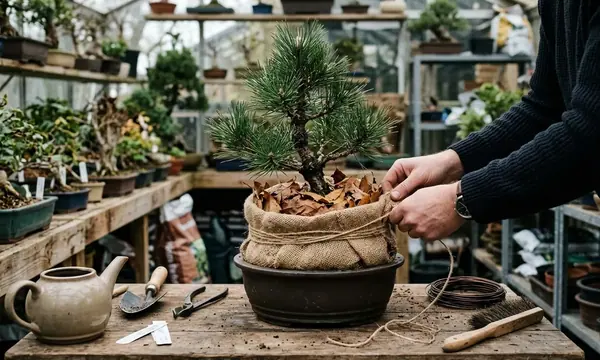
Early spring arrives, and buds begin to swell across the benches. A grower stands over a mature bonsai with a root hook, fresh soil, chopsticks, and scissors staged and ready. The tree is healthy, the nebari is stable, and the pot is intact. Before lifting the tree from its container, the grower pauses. That pause matters in mature bonsai care. Automatic annual repotting is a habit built during the early stages of a tree's life, but applying that same aggressive schedule to an established specimen often introduces unnecessary stress. Mature bonsai require regular inspection, but they should only be repotted when the root system, soil condition, or tree health provides a concrete reason to intervene.
What Repotting Actually Disturbs
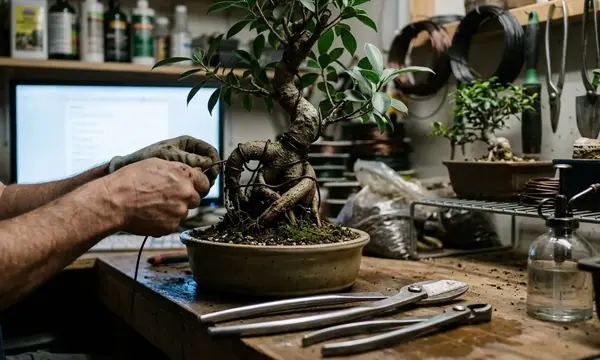
What exactly happens beneath the soil line during a routine repotting session? The process is rarely just a simple exchange of substrate. Lifting the tree from the pot is a minor disruption. Combing out the perimeter roots introduces moderate stress. Cutting the fine feeder roots is where vigor is actually spent.
Fine feeder roots—the delicate, branching tips rather than the thick structural anchors, perform most of the water and nutrient uptake. These microscopic structures take the longest to regenerate after physical disturbance. When a grower repots a healthy refined maple every spring out of habit, cuts back feeder roots each time, and wonders why ramification stalls and internodes stay long despite good technique, the answer lies in the soil. The tree is expending its spring energy rebuilding its root interface rather than pushing the delicate top growth required for advanced styling and pruning.
Established bonsai possess refined root systems that mirror their canopy. Disrupting this network casually forces the tree to abandon its current physiological balance. The basic lesson is consistent: unnecessary root work slows growth and reduces the very vigor needed to sustain dense foliage pads.
Mature Trees Value Stability
Young development bonsai demand aggressive root work to build foundational structure and correct early flaws. Mature trees operate on a different physiological timeline. They are maintained through smaller, highly selective interventions designed to preserve the architecture built over decades.
A stable root environment supports consistent water uptake and predictable drying cycles. When the soil matrix remains undisturbed, the tree settles into a calmer seasonal growth pattern. Refinement-stage goals, such as shorter internodes and denser ramification, depend entirely on this controlled, moderate vigor. A heavy root pruning triggers a survival response, often resulting in a surge of coarse, leggy growth that ruins years of careful branch development.
The interval between repotting sessions for mature trees is often longer and highly variable. It shifts based on species, climate, pot depth, substrate composition, and the current health of the specimen. Allowing a tree to fully colonize its container without becoming root-bound creates the useful balance required for high-level refinement.
When Waiting Becomes Neglect
A tropical species in a shallow pot during a long warm growing season may genuinely need attention on a shorter cadence than a mountain pine. The same 'wait and observe' rule produces opposite actions depending on the tree in front of you. Adopting a conservative approach to root work does not grant permission to ignore the root system entirely. Replacing a calendar habit with care based on observation requires knowing exactly what failure looks like.
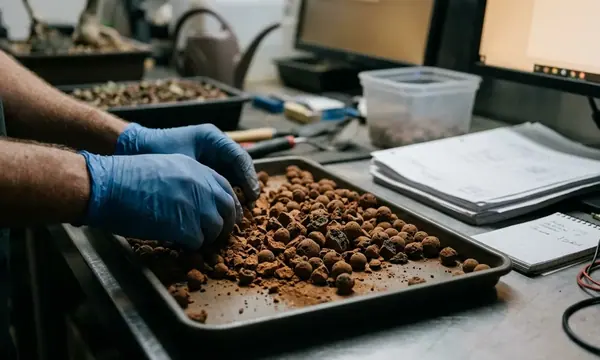
Certain signs show when repotting can no longer be delayed. If water no longer penetrates the surface crust, or if the root ball sheds water down the inside walls of the pot, the soil matrix has failed. Sluggish or uneven drainage, tightly circling roots that push the tree out of the container, and collapsed soil structure are all clear reasons to act. Vigorous deciduous trees and tropical species tend to reach these thresholds much faster than slow-growing conifers.
A visibly declining tree presents a different challenge. Unexplained loss of vigor requires careful diagnosis before initiating major root work. Repotting a weak specimen at the wrong point in its cycle usually compounds the stress rather than relieving it. The goal is to intervene precisely when the soil mechanics fail, but before the tree's health is compromised.
Inspect Yearly, Repot Selectively
Evaluating root health without destroying the soil structure requires a steady approach. A practical annual inspection routine moves from the least invasive checks to the most invasive, stopping as soon as the grower has enough information to make a decision.
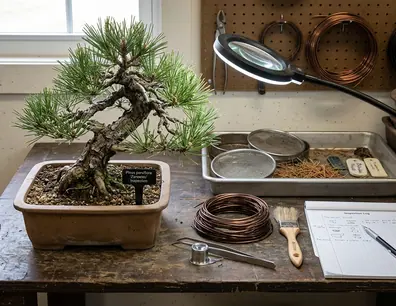
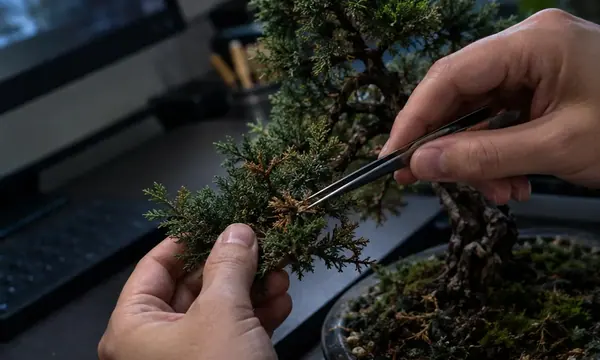
Begin by observing the surface. Note the drainage speed and the watering-in speed during a normal irrigation cycle. Look for surface crusting or algae mats that repel moisture. Next, tilt the pot and examine the drainage holes. Root tips visible at the bottom are normal; a solid, impenetrable mat of roots blocking the mesh indicates a problem. Evaluate the overall vigor of the tree and the strength of the swelling buds. If the tree is pushing strong growth and water moves freely through the pot, the inspection is complete.
If these surface checks raise concerns, a deeper evaluation is warranted. During the species' correct repotting window, gently ease the tree partly from the pot. Examining the root density along the perimeter provides a clear picture of the interior conditions. Pulling the tree out for inspection does not obligate the grower to cut roots. If the soil structure is intact and the roots are healthy, simply slip the tree back into the container.
Pro Tip: Water the tree thoroughly and watch three distinct phases: how fast water enters the surface, how it moves through the root mass, and how cleanly it exits the drainage holes. If water pools on the surface, runs down the sides, or drains unevenly, the soil deserves closer inspection. If water enters evenly, drains cleanly, and the tree is vigorous, you have a strong reason to postpone disruptive work. Key Takeaway: A mature bonsai does not gain health from the frequency of repotting itself; the physiological benefit comes exclusively from correcting a real root or soil problem. Treat annual inspection as a mandatory practice, but abandon annual repotting as a default rule for established trees. Let the physical evidence of drainage, soil structure, and tree vigor dictate when to lift the root hook.