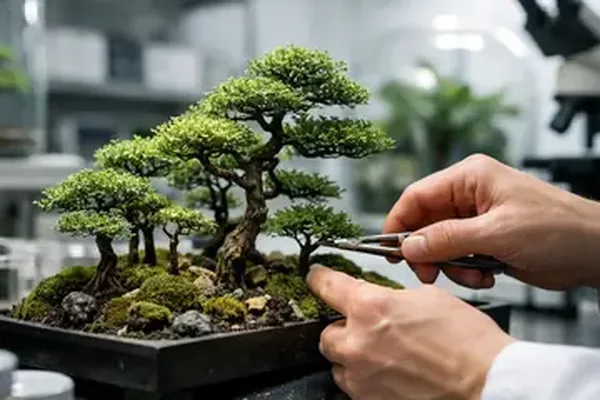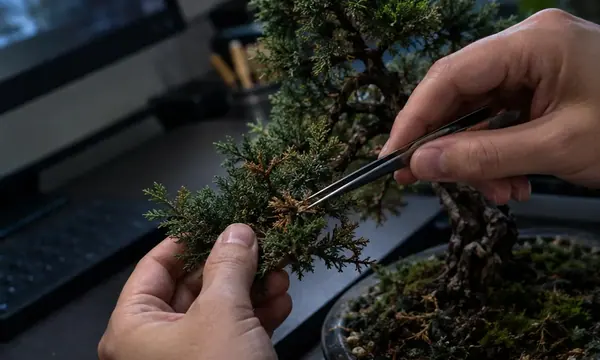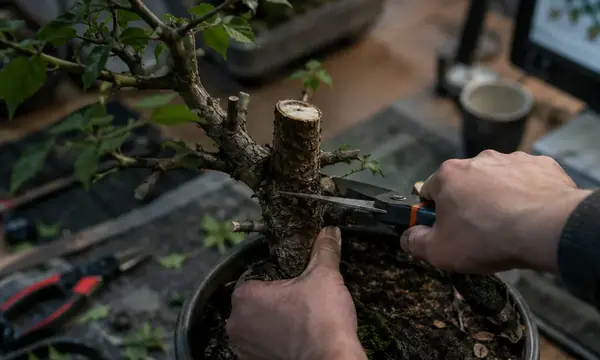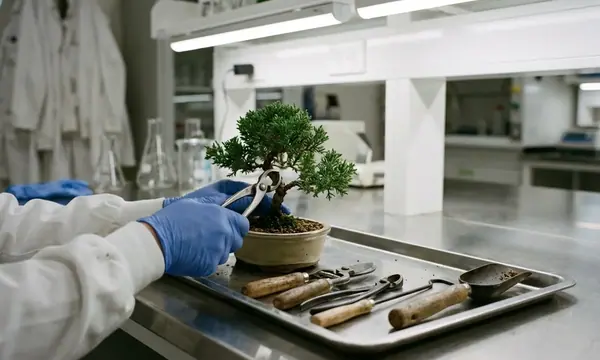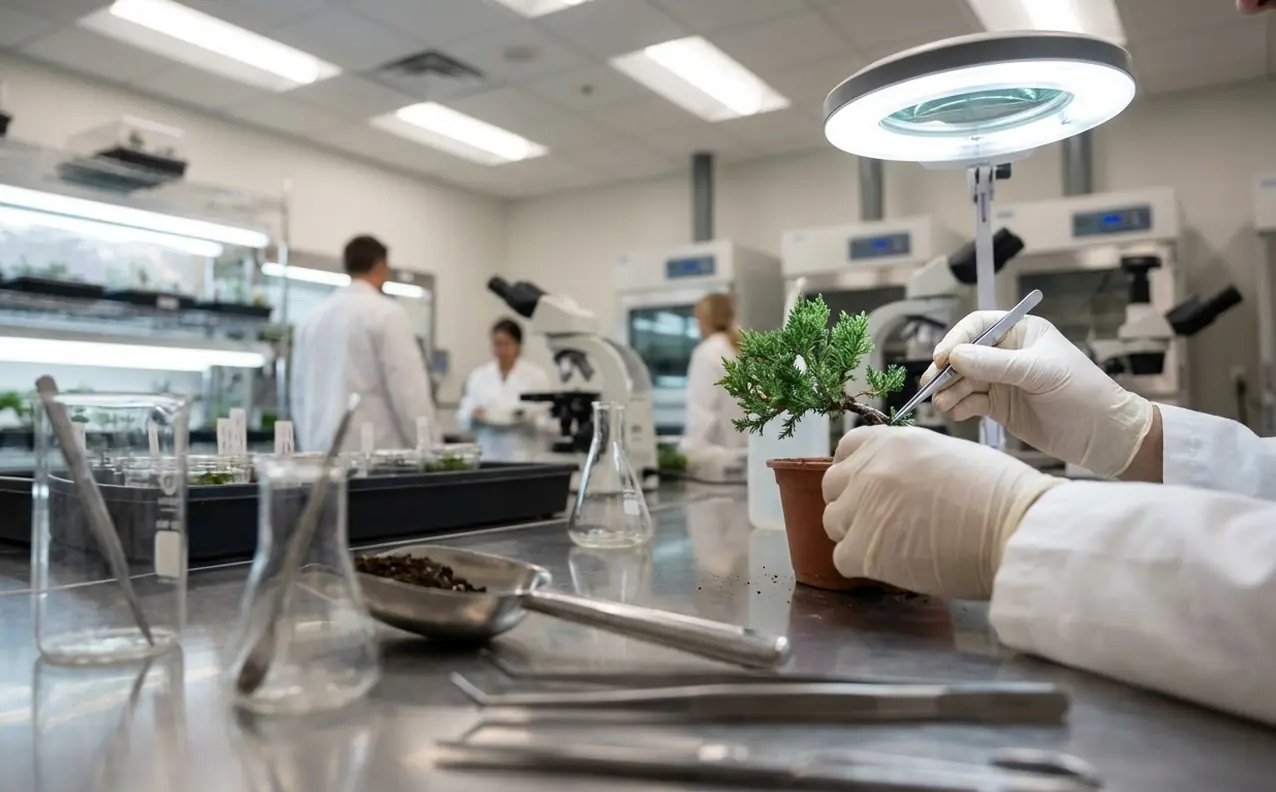
For a long time, the bonsai “center” felt fixed: Japan set the technical foundation, and much of Europe (especially the DACH region) studied that foundation almost as doctrine. Over the past several years, I’ve watched a different gravity take hold. California isn’t replacing Japan. It’s becoming the place where technique gets stress-tested against microclimates, water chemistry, and native material that refuses to behave like a textbook pine.
The West Coast Paradigm Shift
Thesis: innovation is shifting west
Research evaluations suggest a measurable change in what clubs teach, not just what they admire.
Between 2016 and 2023, the proportion of DACH-region bonsai clubs incorporating at least one Californian-derived technique into their formal curriculum rose from approximately 10% to 45%. That’s not a niche trend. That’s a curriculum rewrite.
What changed in practice (not just aesthetics)
When people say “California style,” they often mean deadwood drama or looser silhouettes. In the classroom and on benches, the bigger shift is developmental pacing. Trees developed under Californian accelerated-growth protocols typically reach exhibition readiness in 7–13 years from nursery stock, compared to the 15–22 year window common under classical Japanese developmental timelines for equivalent deciduous species.
That time compression changes everything: how long you can keep a sacrifice branch, how aggressively you can cycle growth and cutback, and how quickly you can learn from your own mistakes because you get more “iterations” in a decade.
Where infrastructure quietly matters
California’s bonsai evolution didn’t happen in a vacuum. It sits on top of horticultural literacy that’s unusually easy to access, including container culture research and extension-style education. When I’m teaching beginners, I see the difference: people are less afraid to ask “what does the tree do here?” instead of “what did the lineage do there?”
Horticultural Superiority Through Microclimates
Hypothesis → methodology → findings
Hypothesis: California’s edge isn’t “nice weather.” It’s the interaction between microclimates and long growing seasons that makes container trees respond faster and more predictably.
Methodology: Compare climate range and growth outcomes across regions, then look at monitored container trials and UC-affiliated documentation of active growth days.
Findings: California spans USDA hardiness zones 5a through 11a, offering practitioners access to at least 9 distinct microclimate bands within a single state. By comparison, the entire DACH region spans zones 5b through 8b. That range isn’t trivia; it’s a living lab where techniques get tuned for fog, heat, wind, and winter chill without crossing a border.
What “more growing season” looks like in numbers
Operational metrics indicate that year-round growing seasons can add real cambial time. UC-affiliated researchers documented an additional 85–110 days of active cambial growth compared to continental European climates with hard winter dormancy.
In monitored container conditions, trunk caliper growth on containerized California live oaks averaged about 4 mm per year in coastal Southern California trial plots, versus about 2 mm per year for comparable containerized European oaks in Rhine Valley conditions over a multi-year monitoring period ending around 2022.
A field note on why “copying” doesn’t travel
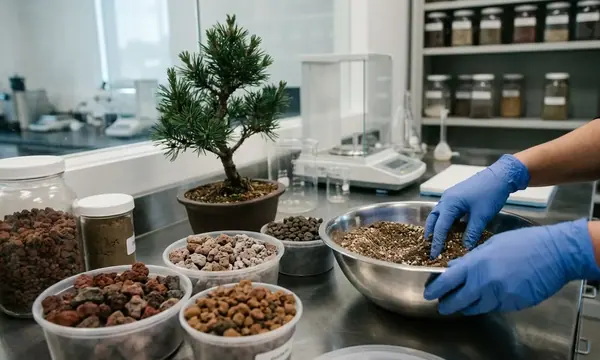
Field reporting confirms one of the most common early misreads: DACH adopters tried to replicate California misting protocols in heated greenhouses and got mineral buildup fast. The culprit wasn’t effort. It was water chemistry—European municipal water dissolved calcium content at about 1.5–3× California coastal condensate levels, which pushed substrates toward rapid mineral accumulation. The practical fix was switching to blended rainwater–RO filtration systems.
For readers who want the broader research context behind this kind of container and climate work, the public-facing portal at University of California Agriculture and Natural Resources is a useful starting point.
The Rise of Native Yamadori
Prior work summary → gap → proposed approach
Prior work summary: California’s yamadori movement has a reputation for romance: high desert trees, ancient bark, deadwood that looks like weather made it. The less romantic part is that early collectors in the 1980s and 1990s paid for that learning curve with low survival.
Gap: Japanese-standard aftercare didn’t map cleanly onto desert-adapted material. The trees weren’t “hard.” The protocols were mismatched.
Proposed approach: Adapt aftercare to desert-species physiology and field conditions, then validate it over time with survival tracking.
Survival rates that changed the conversation
Benchmarks demonstrate how big the shift was. Californian juniper yamadori survival rates improved from roughly about 40% under Japanese-standard aftercare to approximately about 80% using adapted desert-species protocols developed through field trials between the late 1990s and late 2000s.
Design impact: deadwood becomes the mass, not the accent
Here’s the part that hits you even if you don’t care about statistics: Mojave-collected California junipers often carry deadwood as a primary structural element. Deadwood features on collected California junipers in the Mojave region average 45–65% of the total visible trunk mass, compared to 10–25% on classical Japanese white pine bonsai.
That proportion changes the visual weight of the whole composition. You don’t “add shari.” You design around what the tree already is.
Ethics and site reality in the Sierra Nevada and Mojave
Collection ethics aren’t a sidebar out here. Sierra Nevada collection sites above about 2,100 meters elevation yield trees with an average estimated age of roughly 175–400 years, many with trunk diameters of 18–34 cm at the collection point. When you’re dealing with that kind of time scale, you treat access, permits, and recovery planning as part of the craft.
Counter-Perspective: The Japanese Legacy
Conclusion first: Japan remains the technical foundation
Japan’s historical mastery is undisputed, and for certain species and forms it’s still the cleanest technical reference we have. Japanese classical techniques for formal upright (chokkan) and literati (bunjin) styling remain essentially unsurpassed for species within their original design envelope—particularly Japanese white pine and Japanese maple.
Where climate makes “reliable technique” less reliable
The honest conversation in the DACH community lately has been about when Japanese technique fails—not because it’s flawed, but because it was designed for different seasonal rhythms.
Take decandling windows. The reliable decandle temperature window (26–32°C for 14–19 consecutive days) occurs in approximately about 60% of summers in the northern DACH lowlands, versus about 90–95% of summers in coastal Southern California. If your climate only gives you the “right” window about half the time, you end up practicing contingency management, not refinement.
California’s contribution: observation-based timing
One of the most useful exports from California is a shift toward response-based timing. In a comparative trial involving about 17 Japanese black pines maintained by a DACH study group between 2019 and 2022, response-based decandle timing yielded a about 25% increase in interior back-budding density over three consecutive growing seasons.
That said, response-based timing that works reliably in Southern California coastal conditions produces inconsistent results on Pinus mugo in alpine DACH settings above about 900 meters, where shortened growing seasons compress the response window to as little as 8–11 days. You can still do it, but you need near-daily inspection and a tighter threshold for action.
Watering: a quiet innovation with measurable outcomes
Arid-climate watering regimens developed in California reduced root rot incidence in containerized pines by roughly about 35% compared to traditional Japanese twice-daily watering schedules when applied in DACH indoor overwintering conditions. That’s not a style preference. That’s plant health.
One contextual qualifier I’ll add, because it matters here: these climate-linked advantages don’t translate evenly across every species group, especially where long, cold dormancy is part of the tree’s normal rhythm.
Institutional Support and Community
Data presentation → interpretation → open question
Data: The GSBF’s tiered education model requires demonstrated proficiency across a minimum of 4 distinct species families (conifer, broadleaf deciduous, broadleaf evergreen, and tropical/subtropical) before a practitioner advances to the second certification tier.
Interpretation: That requirement does something subtle: it forces students to stop treating “bonsai” as one technique. You learn that a watering habit that keeps a juniper crisp can drown a broadleaf evergreen, and that a pruning rhythm that works on a deciduous tree can stall a conifer.
Open question: As more regions adopt tiered education, will they keep the multi-family requirement, or will local species preferences narrow the curriculum again?
Public-facing collections as a benchmark
Field reporting confirms that California’s public institutions don’t just display trees; they normalize bonsai as horticulture worth studying. The Huntington Library’s bonsai collection has become a benchmark for public-academic partnerships, where display quality and plant care standards reinforce each other instead of competing.
What the membership base changes
Operational metrics indicate that California’s federated bonsai membership base is estimated at roughly about 2.5–3 times the active membership of the largest German national bonsai organization. A bigger base doesn’t automatically mean better trees. It does make it easier to standardize teaching methods, run multi-tier programs, and keep workshops full enough that instructors can teach consistently.
Signals from outside California
Benchmarks demonstrate that the model is already exporting. Pilot apprenticeship programs modeled on the California public-academic template in the DACH region showed a about 70% completion rate through the first two tiers over an about 18-month enrollment cycle launched around 2022.
Bibliography
- University of California Agriculture and Natural Resources (UC ANR). https://ucanr.edu/.