What's Inside
- Why Aftercare Decides Recovery
- The First 48 Hours
- Watering Fresh Bonsai Soil
- Light, Wind, and Humidity Control
- Species, Season, and Scope Limits
- Recovery Timeline and Troubleshooting
The highest-consequence mistakes in bonsai cultivation cluster in the first weeks following a repot. A grower's instinct to help a recovering tree often drives premature intervention. The critical recovery window spans roughly the first two to six weeks, depending on the species and the severity of root reduction. During this period, the sole objective is physiological stability.
Why Aftercare Decides Recovery
Repotting fundamentally disrupts a tree's baseline functions. The process removes fine feeder roots, impairs immediate water uptake, and alters the physical anchoring of the trunk. The tree loses its established balance between foliage transpiration and root absorption.
Across nursery conditions, survival depends on managing this temporary deficit, though sample conditions varied slightly across microclimates. The goal right now is stability—not growth, styling, fertilizing, or visual perfection.
Guidance shifts with species, season, root reduction severity, climate, and container drainage. No single frequency or placement rule transfers cleanly across all setups. You must read the tree's response rather than a calendar.
Warning: A freshly repotted bonsai cannot replace lost moisture quickly, even if the soil surface looks normal. Do not treat it like a healthy tree.Consider a common scenario: new spring buds push immediately after repotting. A grower reads this stored-energy release as full recovery, applies fertilizer, and moves the tree into full sun. This sequence triggers rapid collapse because the reduced root system cannot support the sudden foliage demand.
Avoid full sun, heavy fertilizer, aggressive pruning, wiring, defoliation, and unnecessary repositioning during early recovery. Both overwatering and underwatering pose severe risks right now. Fresh soil drains differently, and the tree's uptake remains temporarily impaired.
Watch for specific red flags warranting intervention. Sudden wilting in shade, blackening foliage, sour-smelling soil, unstable trunk movement, and water that pools without draining require immediate assessment.
The First 48 Hours
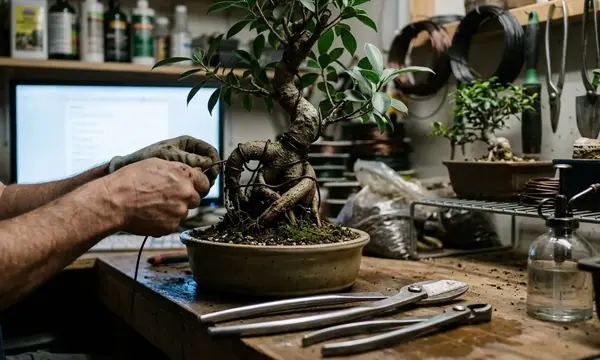
What happens the moment the tree goes back onto the bench? The immediate priority is securing the physical environment. You must secure the tree in the pot so new root tips are not torn by wind, handling, or movement.
The first watering acts as a soil-settling step rather than a repeated hydration routine. Water thoroughly once to settle the substrate and confirm water exits all drainage holes. Repeatedly flushing the pot washes fines out and destabilizes the fresh mix.
Place the container in protected shade for close to the first 24 to 48 hours before any reassessment of light exposure. This brief isolation allows the disturbed root system to stabilize without the stress of active transpiration demands.
Watering Fresh Bonsai Soil
A grower trusts the surface finger test, sees dry substrate, and waters daily. Meanwhile, the retained old root ball stays saturated below, stalling feeder-root regrowth. Identical watering habits produce opposite outcomes depending on the container profile.
Watering frequency requires assessment, not a fixed schedule. Fresh inorganic mixes drain unpredictably around a retained old root ball. A shallow bonsai pot's edges can dry within hours while the core stays wet. Conversely, deeper nursery recovery pots hold water noticeably longer.

Leave a wooden chopstick in the substrate to read moisture below the surface. Check it morning and evening. You are looking for visual and tactile changes in the akadama, pumice, lava rock, or organic components before applying more water.
Light, Wind, and Humidity Control
Reduced roots cannot support normal transpiration immediately. Placement dictates how much water the foliage demands from a compromised system.
Provide filtered morning light with protection from hot afternoon sun. Shelter the tree from drying wind, which drives transpiration just as aggressively as direct heat. Shade does not mean darkness; the tree still needs useful light to fuel the recovery process.
Increase light gradually over one to two weeks while watching the foliage response. If the leaves remain turgid and stable, the root system is beginning to match the environmental load.
Pro Tip: Group recently repotted trees together in one protected recovery area. Consistent care becomes easier, and subtle problems get noticed faster.Establish a simple daily routine on the recovery bench. Check trunk stability, inspect soil moisture via the chopstick method, look under the foliage for pests, and confirm drainage. Avoid unnecessary handling.
Tag each tree with the repotting date, species, root reduction severity, and soil mix. These details prevent memory lapses when deciding if a tree is ready to return to the standard benches.
Species, Season, and Scope Limits
Does every bonsai follow the exact same recovery trajectory? Broad tendencies exist, but context dictates the specific timeline. Conifers generally warrant more conservative aftercare than vigorous deciduous trees.
Spring repotting, summer emergency repotting, and tropical indoor repotting each carry distinct risk profiles. Tropicals repotted indoors face different risks under warm, humid conditions compared to a juniper handled in early spring. For broader context on species-specific baseline requirements, consult university extension guidance on bonsai care.
This framework addresses aftercare following a completed, planned repot. A tree showing severe root rot, active pest infestation, freeze injury, or major trunk damage needs targeted diagnosis, not routine recovery protocols.
Recovery Timeline and Troubleshooting
Measure recovery in qualitative stages rather than fixed day counts. Tying actions to the calendar invites you to advance care before the tree is ready. The order of resumption matters: root stability precedes foliage growth, which precedes structural work.
Resume mild feeding only once the tree is actively pushing growth and its moisture use has become predictable. Delay wiring, pruning, and branch selection until the tree has regained vigor, which is often well past the first flush of new buds.
When troubleshooting, prioritize the trend over a single snapshot. A stable symptom requires different triage than a rapidly degrading one. Failed drainage or sour, anaerobic soil are among the few cases where emergency repotting is justified. Otherwise, avoid lifting the tree to inspect the roots.
Key Takeaway: Protect first, observe second, intervene only with a clear reason. Most post-repot losses stem from premature adjustments rather than the repotting itself.