What's Inside
- Build Compact Branching From Interior Shoots
- Postpone Hard Pruning When Growth Falters
- Prepare Bougainvillea With Sun and Warmth
- Shorten Woody Branches Around Living References
- Photograph Bud Changes Between Waterings
- Read Root-Zone Drying Before Feeding
- Let Interior Shoots Establish Their Leaves
- Match Your Next Action to the Tree
Build Compact Branching From Interior Shoots
Successful back-budding gives a woody bougainvillea bonsai new options for compact branching and taper. A severe cutback in shade or cold can leave bare stubs that remain unchanged while the tree struggles to resume growth.
Back-budding means new shoots emerging behind existing branch tips, including along older sections where green stems have developed tan or grey bark. Those interior shoots can eventually replace long, sparsely leafed extensions. Their position matters: growth close to the trunk gives you more freedom to shorten a branch while retaining foliage.
Prepare the growing conditions first, choose an active pruning window, make selective cuts, then manage moisture and nitrogen during recovery. Keep enough foliage to support that sequence. Where shortening the entire framework would leave almost no leaves, work in stages and allow new growth to extend before continuing.
Postpone Hard Pruning When Growth Falters
Resolve Stress First
A bougainvillea with limp leaves early in the morning and substrate that remains wet below the surface needs stable care before structural pruning. Cutting its branches adds another demand while the tree is already growing poorly.
Postpone structural work when the tree wilts, loses vigor, sits in persistently wet substrate, or faces nights dropping toward roughly 10 °C (50 °F). Recent root disturbance or a sudden move also calls for patience. Bougainvillea can shed leaves quickly after those disruptions; a sparse canopy should prompt a care check.
A tree ready for structural work carries firm, well-colored leaves and fresh extension at its tips. Keep major top work and root work in separate growing seasons, because bougainvillea roots tolerate rough handling poorly.
If you have already cut the tree to bare stubs, leave them alone. Correct the light, warmth, and watering interval, then watch for several weeks before deciding on another cut.
Prepare Bougainvillea With Sun and Warmth
Where will the tree rebuild its foliage after pruning?
An open, sunny bench or ledge provides a suitable growing position. Aim for roughly six or more hours of direct sun once the tree has acclimatized. A shaded porch shelf or dim room works against interior growth because the remaining foliage has less light available to support recovery. Fertilizer cannot replace that light.
Move a protected tree into direct sun gradually over about 10–14 days. Begin with morning exposure and add midday sun in steps. Inspect leaves for pale or scorched patches as exposure increases, and check the substrate more often: a warmer, brighter position can dry a shallow bonsai pot faster.
Choose the pruning window from the tree's activity. Look for nights consistently above about 15 °C (59 °F), together with new leaves and shoots that have lengthened over the past couple of weeks. These signs connect the cut to an active growing period more reliably than a calendar date alone.
Shorten Woody Branches Around Living References
Give each structural cut a clear purpose and a visible reference. A lateral branch, node, or existing small shoot helps connect the reduction to the framework you intend to develop. An arbitrary point along bare bark offers no assurance that a bud will emerge there.
Identify the area that needs shortening. Find the branch or trunk section where interior growth would improve compactness or taper. Decide which part of the current framework you want to retain.
Inspect the intended front. View the tree from its main display angle. Separate structural shortening of woody branches from routine trimming of soft green extension; each changes the tree at a different scale.
Find a living reference. Locate a healthy lateral, visible node, or existing shoot near the proposed cut. If shortening every branch would leave the tree nearly leafless, begin with one side or the heaviest branches and retain foliage elsewhere.
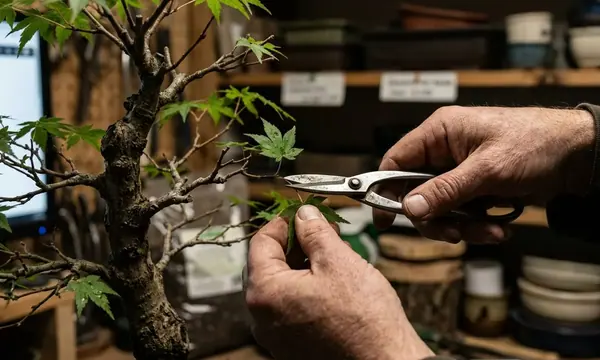
Match the tool to the wood. Use bypass shears for green shoots, a concave cutter for suitable woody branches around pencil-to-finger thickness, and a fine saw for larger wood. Support the branch as the cut finishes so its brittle wood does not tear down the bark. On thorny cultivars, wear gloves and work from the outside inward to keep hands clear of spines.
Open congested outer growth selectively. Thin tips that heavily shade the interior while retaining leafy branches to support recovery.
Return the tree to its prepared position. Keep the sunny growing conditions steady and assess substrate moisture before watering.
Staged reduction preserves options. Revisit the remaining long branches after new growth has extended on the first shortened sections.
Photograph Bud Changes Between Waterings
Keep the Same View
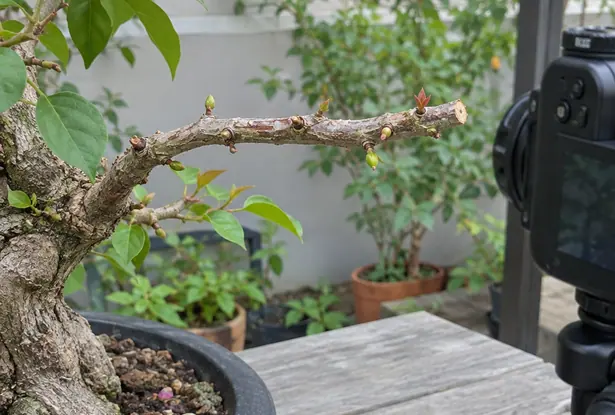
Photograph the pruned branch on cutting day, then repeat the photograph from the same angle and distance every 5–7 days during routine care. Look for swelling bumps, small green or reddish points, and shoots extending near the woody framework. Leave the bark intact and avoid exploratory recuts; each extra wound needs sealing.
Read Root-Zone Drying Before Feeding
Does the root ball need water simply because the surface looks dry? After pruning, check below that surface before reaching for the watering can.
A reduced canopy can use less water, so the old watering schedule may keep the roots wet for longer. Establish a controlled wet-dry cycle: water the root ball thoroughly until water runs freely from the drainage holes, let the pot finish dripping, and assess drying before watering again.
Check Beneath the Surface
Insert a wooden chopstick or a finger 3–5 cm into the substrate. A cool, dark, damp result means wait, even when the surface crust appears dry. Lift the pot after a thorough watering and again when it needs water; learning that difference in weight gives you another practical reference.
Allow a drying interval without letting the root ball become severely dry. Deliberate drought stress does not belong in this back-budding plan.
If the root zone stays wet, check drainage holes and mesh for clogging, empty any water-filled saucer, and confirm that the position is warm and sunny. Replace small daily splashes with thorough watering followed by a fresh moisture assessment.
Wait for Extending Shoots
Hold nitrogen feeding until new shoots are extending. Then resume fertilizer at the product's label rate or below, adjusted to the tree's vigor. Keep observing the substrate as foliage develops, since water use changes again as the canopy rebuilds.
Let Interior Shoots Establish Their Leaves
A tiny green point marks the beginning of a response. A developing shoot lengthens between weekly photographs and opens several true leaves. Give that growth time to establish foliage before you begin refinement.
Immediate pinching of every emerging tip interrupts the extension you are trying to encourage. Leave new shoots unpinched until they carry several sets of leaves. Defer wiring or bending until the stem firms and begins to lose its soft, bright-green appearance.
Keep Useful Directions Open
Assess new shoots provisionally by position and direction. A shoot that fills a gap, grows outward or sideways, and follows the intended branch line may become useful structure. Mark surplus growth for later review and reserve final choices until the shoots have established their own foliage.
Check Conditions When Buds Stall
- Bare stubs remain unchanged across several photographs: check whether the tree receives direct sun and sustained growing warmth.
- The root zone remains wet: inspect drainage and reassess the interval between waterings.
- Leaves hang limp before the day heats up: postpone further cuts and check root-zone moisture.
Use the visible symptom to choose the next care check. Keep the framework undisturbed while you correct growing conditions.
Match Your Next Action to the Tree
A recently disturbed bougainvillea needs a different next step from a vigorous tree extending in full sun. Choose the path that matches its present condition:
- Stressed or poorly growing: leave the branches intact and stabilize warmth, light, and watering.
- Vigorous in warm, sunny conditions: plan selective structural cuts while retaining supporting foliage.
- Already pruned: keep conditions steady, photograph weekly, and hold nitrogen until shoots extend.
Before the next watering, test the substrate 3–5 cm below the surface and use that reading to decide whether to water thoroughly or wait.