Article Navigation
What's Inside
Cultivating a fast-growing bonsai for trunk development requires a different eye than styling a finished tree. Long shoots look encouraging, but a convincing trunk comes from root room, foliage mass, timing, and restraint with the scissors. For beginners, the right species should grow strongly without punishing ordinary mistakes in watering, pruning, or seasonal timing.
Growth Speed Is Not One Thing
A beginner often asks for the fastest bonsai species, then brings home a tree that makes long shoots but keeps a thin, pencil-like trunk. Those are different kinds of speed.
I compare development trees by three practical criteria: shoot extension, trunk thickening, and recovery after pruning. Shoot extension tells you how quickly the tree produces usable energy. Trunk thickening tells you whether that energy becomes caliper. Recovery after pruning tells you how safely you can correct the tree while learning.
In practical scenarios, a Chinese elm kept in a shallow refinement pot can push close to 40 cm of new shoots in a season yet add almost no trunk caliper. That single example explains why extension speed misleads beginners about progress. A vigorous Chinese elm may produce somewhere around 30 to 60 cm of new shoots in one growing season, but meaningful trunk caliper gains usually need evaluation across two to four growing seasons.
This article uses relative categories instead of exact annual measurements. Climate, container size, feeding, watering, and starting material change the result too much for precise promises. California adds another layer: a tree that feels fast on the mild coast may stall for something in the neighborhood of six to ten weeks during an inland heat spike.
Quick Species Cards
Start with the tree that forgives the most common beginner errors, not the one with the most dramatic growth reputation. Speed only helps when you can guide it.
Chinese Elm
Best all-round beginner choice. Chinese elm extends strongly, back-buds well, and tolerates corrective pruning better than most beginner candidates. It adapts broadly across California when watering matches the site. Nursery stock or a grow box gives it enough vigor to build trunk while keeping design options open.
Trident Maple
Best trunk-building specialist. Trident maple can thicken impressively in the ground or a large grow box, especially when roots can run in a 30 to 40 cm deep bed. It asks for closer watering in high heat. A trident that thrives near the coast may drop leaves from heat stress within hours during an inland afternoon above 35°C if one watering is missed.
Ficus Microcarpa
Ficus microcarpa grows quickly in warm, protected conditions and suits patios that stay mild. Its extension slows sharply once night temperatures drop below roughly 10°C and can stop near frost. In a warm coastal microclimate it may need weekly pinching, while in a foothill frost pocket it can sit still for much of winter.
Pomegranate
Pomegranate gives beginners a useful blend of toughness, sun tolerance, and character. It can make convincing aged bark and responds well to development pruning. Its branching can become coarse, so early structural choices matter.
Olive
Olive handles dry sun better than many broadleaf options and fits Mediterranean-style California gardens. It develops rugged bark and compact foliage over time. It does not always thicken as quickly as a trident maple, but it rewards steady culture.
Japanese Black Pine
Japanese black pine builds excellent trunks when grown with skill, but its timing is less forgiving. Candle work is season-critical; decandling generally occurs in early to mid summer, and mistiming it by two to three weeks can affect needle length and back-budding for the whole year.
Juniper
Juniper suits growers who value movement, deadwood, and compact evergreen design. It rarely offers the quick feedback that beginners expect from deciduous trees. It can be strong, but it does not like repeated heavy correction while weak.
Comparison Matrix: Speed, Thickening, and Control
The table keeps the rankings qualitative because numeric growth rates would imply a precision that the material cannot support. Read it as a planning tool for beginner trunk development, not as a performance guarantee for every cultivar, soil mix, yard, or watering routine.
Beginner Trunk-Development Comparison Matrix| Species | Relative Shoot Growth | Trunk-Thickening Potential | Best Development Method | California Climate Fit | Beginner Tolerance | Refinement Timeline | Main Caution |
|---|---|---|---|---|---|---|---|
| Chinese elm | Fast | Strong and controllable | Nursery stock or grow box | Broad fit with attentive watering | High | Primary structure commonly precedes fine ramification work by three to five seasons | Shallow pots slow trunk gain |
| Trident maple | Fast | Very strong with root room | Ground bed or deep grow box | Excellent coast; careful inland placement | Moderate | Best treated as a multi-season trunk project before refinement | Heat and missed watering can scorch leaves quickly |
| Ficus microcarpa | Fast in warmth | Moderate to strong in protected sites | Large container in warm exposure | Best in warm coastal or protected patio conditions | Moderate | Responds quickly when kept warm | Cold nights and frost stop momentum |
| Pomegranate | Moderate to fast | Good | Grow box or sunny nursery container | Strong inland and coastal candidate | High | Develop structure first, then reduce coarse shoots | Coarse branching needs early control |
| Olive | Moderate | Good over time | Sunny container or ground development | Excellent in dry sun where frost is limited | High | Best for patient development and aged character | Slow response after overly hard work |
| Japanese black pine | Moderate to fast when vigorous | Strong with correct sacrifice growth | Ground bed, pond basket, or grow box | Good in sun with disciplined technique | Low to moderate | Requires staged pine training before refinement | Candle timing controls the year |
| Juniper | Moderate | Moderate | Grow box with strong sun and drainage | Good in many sites with airflow | Moderate | Better for styling practice than rapid caliper | Weak trees dislike heavy repeated pruning |
What Actually Thickens a Trunk
Trunk thickening comes from energy production and time. Foliage mass feeds the tree. Root room lets the tree use that energy. Water availability keeps growth from stopping. Uninterrupted extension growth gives the trunk a reason to lay down wood.
A shallow bonsai pot improves proportion and control, but it slows thickening. That is useful for refinement and frustrating for development. When you still need girth, choose a development container: a grow box, nursery can, pond basket, or ground bed with enough drainage and root space.
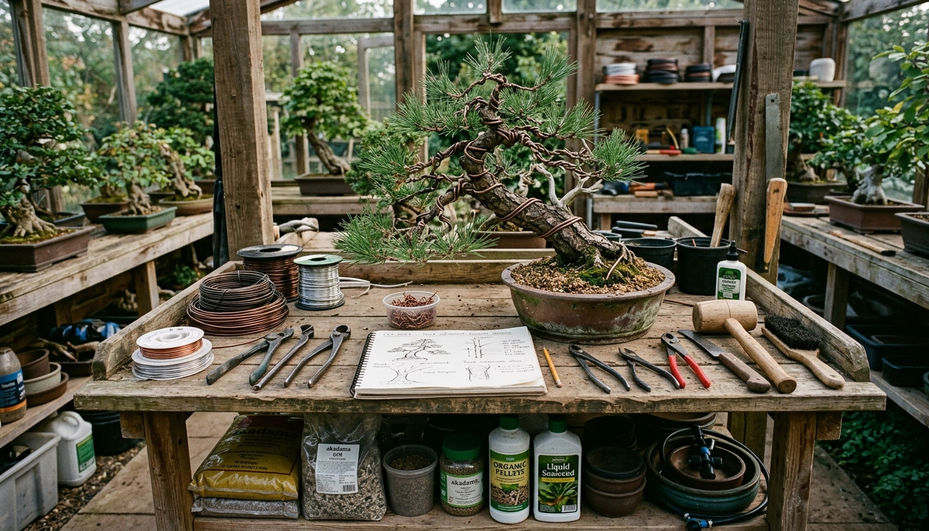
The main beginner technique is the sacrifice branch. You allow one branch or leader to run beyond the final silhouette so it feeds the trunk section below it. A sacrifice branch left for one to two full seasons can noticeably thicken that lower section before removal.
There is a cost. Unchecked top growth can create long internodes within a single vigorous season if the leader is not managed. Keep the future design line in view, and do not let a sacrifice branch become the whole tree.
Pro Tip: Mark the future front and trunk line before you let sacrifice growth run. That small decision keeps vigor useful instead of random.California Climate Fit
Which fast species works best in California? The better question is where the tree sits at 3 p.m. in August and where it sleeps in January.
Mild Coast
Coastal growers can use Chinese elm, olive, pomegranate, and ficus in the warmest protected microclimates. Chinese elm remains the safest first choice because it combines speed with pruning tolerance. Olive and pomegranate handle bright conditions well, while ficus needs protection when nights cool.
Hot Inland Valley
Inland growers should treat watering discipline as part of species selection. Trident maples in small containers during afternoons above 35°C can scorch within a few hours if watering lapses, so many growers move them to morning sun. Pomegranate and olive offer better resilience in dry heat, while Chinese elm performs well when roots never swing from saturated to bone dry.
Warning: This comparison supports beginner development planning. Verify frost timing, afternoon heat, and your watering routine before committing an expensive trunk project to one microclimate.Foothill Frost Pockets
Cold pockets change the ranking. Ficus may stop entirely near frost, so it belongs under protection or indoors during cold snaps. Deciduous species still need a real dormancy period, generally several weeks of cool temperatures, rather than year-round forcing on a warm patio.
Protected Patios
Patio growers often have wind shelter but limited root volume. That favors Chinese elm, pomegranate, and protected ficus over thirsty maples in small pots. Check your local winter baseline with the USDA Plant Hardiness Zone Map, then refine the choice by actual sun, reflected heat, and watering access.
Pros and Cons by Growth Strategy
The same species behaves differently depending on how you start it. A Chinese elm in a grow box and a Chinese elm in a shallow display pot may share a label, but they do not share the same development pace.
Strategy 1: Buy Vigorous Nursery Stock
✓ Pros
- Immediate trunk base gives you something to study and style.
- You practice branch selection sooner than with seedlings.
- Chinese elm and pomegranate nursery stock often recover well from staged reductions.
✗ Cons
- Root flaws may stay hidden until the first repot, sometimes one to two seasons after purchase.
- Awkward branch scars can restrict the final design.
- The existing trunk may force a style you would not have chosen from younger material.
Strategy 2: Grow in the Ground or a Large Box
✓ Pros
- This route gives the strongest thickening potential.
- Root spread and nebari can improve when you intervene at the right stages.
- Trident maple responds especially well when root room, water, and extension growth align.
✗ Cons
- Visual gratification comes slowly because the tree may look untidy during development.
- Strong thickening often leaves coarse branch scars that need extra seasons to refine.
- You must prune with a future trunk line in mind, not just let the tree become large.
Recommended Shortlist
Choose by intent, not by reputation. The fastest tree on paper may become the slowest project if your site fights its basic needs.
Key Takeaway: For most beginners developing trunk in California, start with Chinese elm. Choose trident maple when trunk thickening is the main project and you can manage summer watering. Use pomegranate or olive when dry sun and resilience matter more than rapid refinement.- Best overall beginner choice: Chinese elm. It balances strong extension, pruning tolerance, back-budding, and design flexibility. It also lets a beginner make corrections without losing several seasons.
- Best trunk-thickening project: trident maple. Grow it in a ground bed or large box, then protect it from inland heat stress with careful watering and morning-sun placement.
- Best warm protected patio choice: ficus microcarpa. It can move quickly in warmth, but cold nights change its behavior completely.
- Best dry-sun character tree: olive. It suits patient growers who value bark, ruggedness, and Mediterranean character.
- Best species to postpone: Japanese black pine. It builds powerful bonsai, but candle timing and staged pine technique make it less forgiving as a first trunk-development tree.
If you want one tree to learn from this season, buy a healthy Chinese elm with a usable trunk base and place it in a development container. Let one sacrifice branch run, keep the lower design visible, and judge progress by caliper over seasons rather than shoot length over weeks.